 Kitchen AI
 Modern
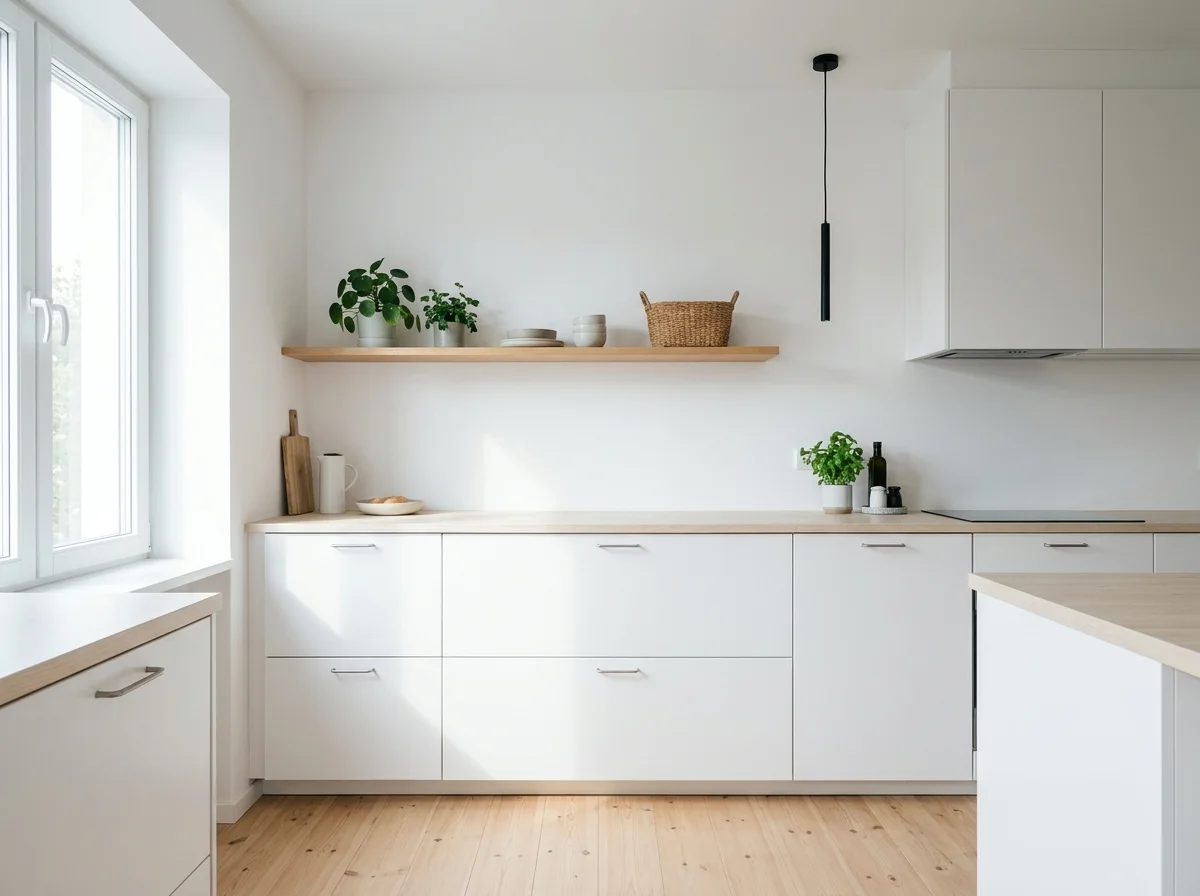
 Scandinavian
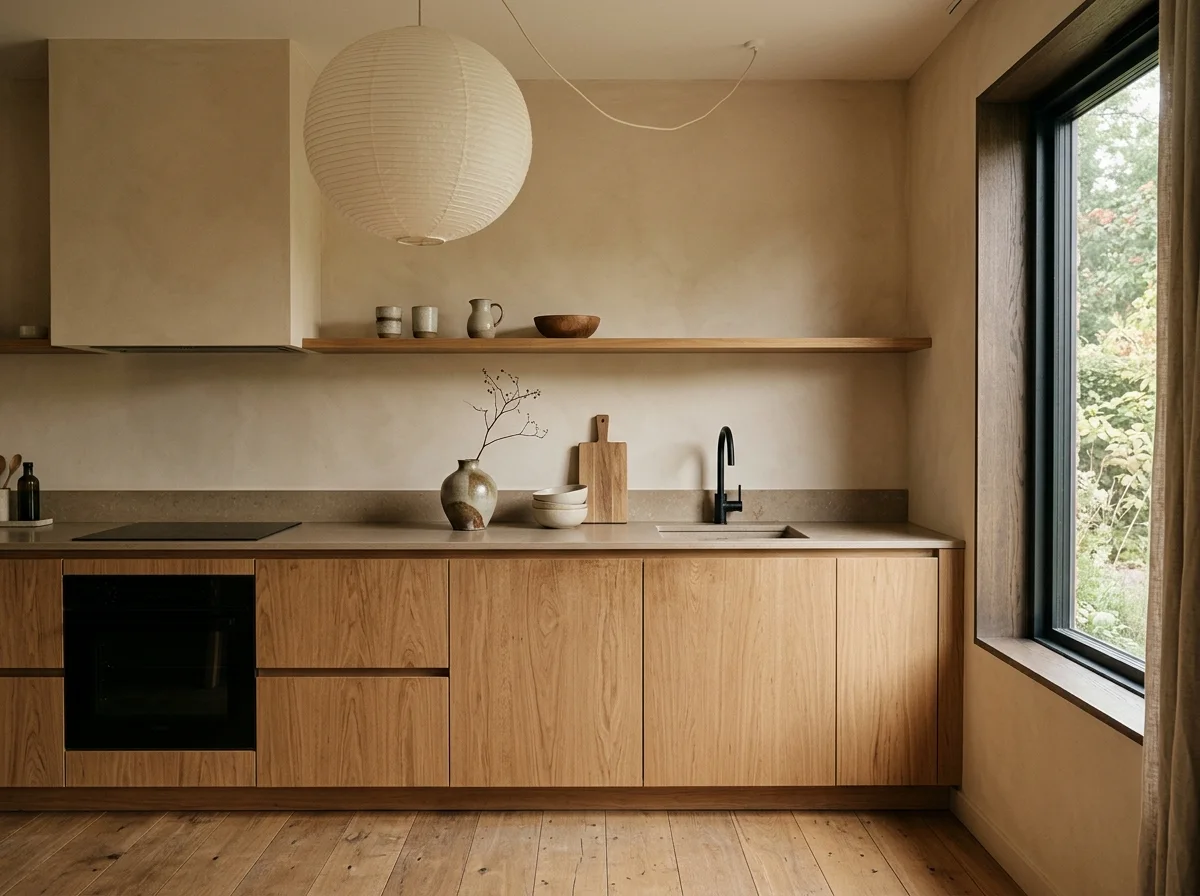
 Japandi
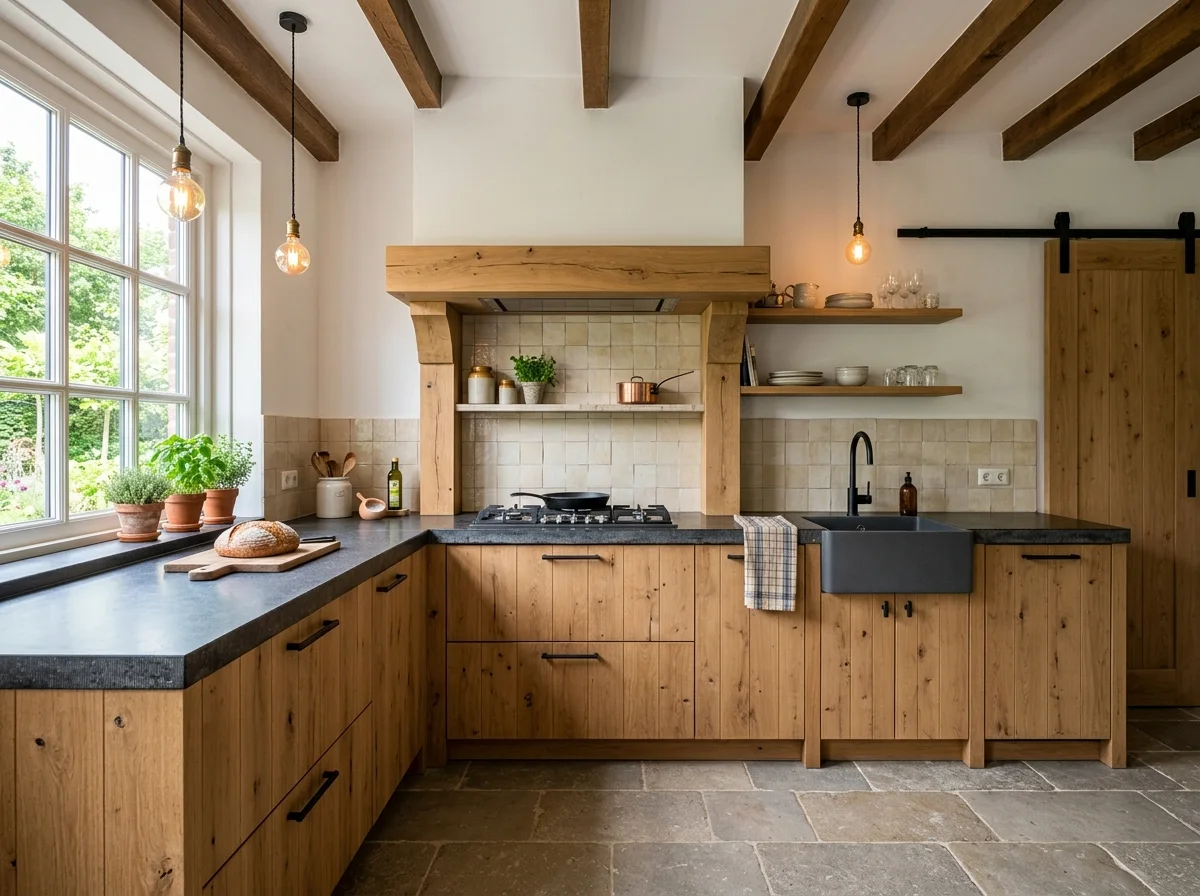
 Modern farmhouse
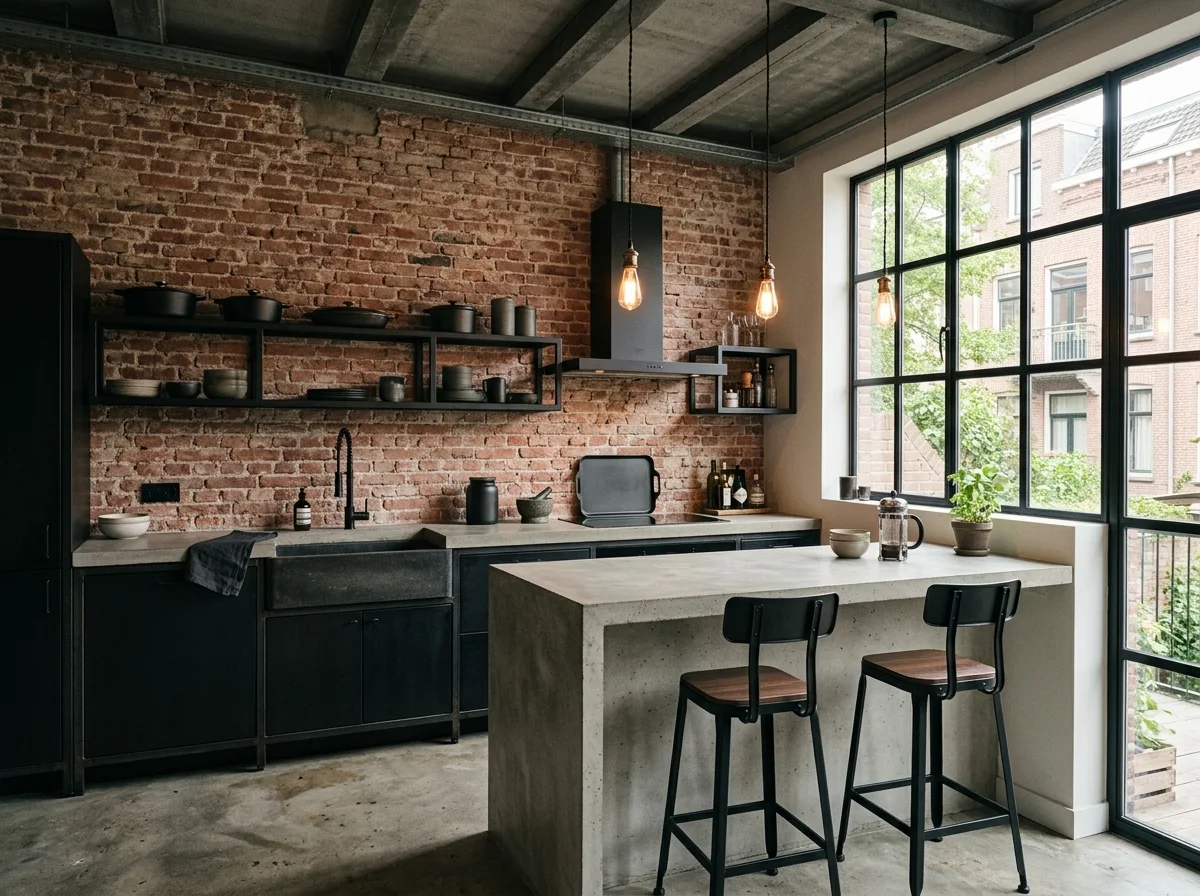
 Industrial
 Quiet luxury
Kitchen style
A Quiet Luxury Kitchen, Designed and Seen in Your Own Space
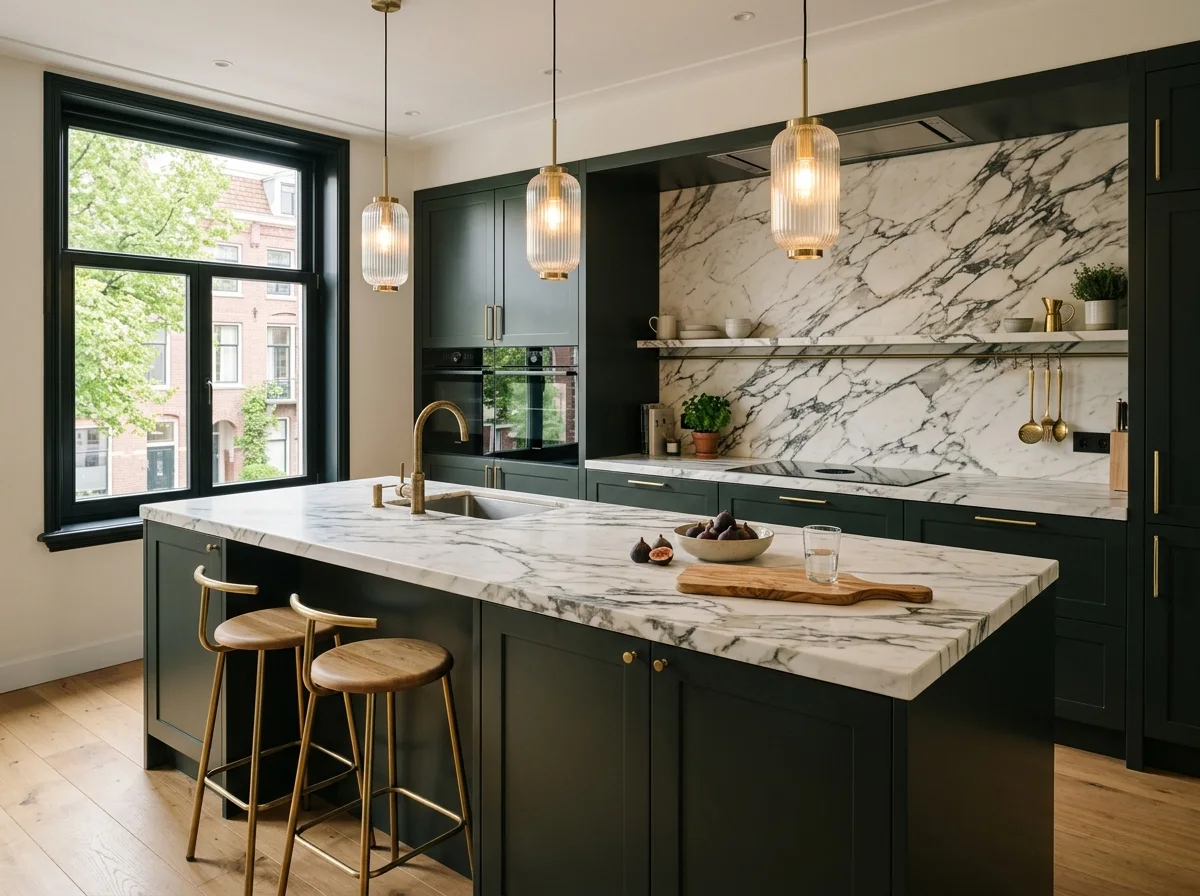
Veined natural stone, deep colors and a continuous grain. Take a photo of your kitchen and see how it plays out at your place.

Free to try. No account needed.
Features
What Makes a Kitchen Quiet Luxury
The name is deliberately understated, since shouting about quiet luxury would defeat the entire point of it.
Quiet luxury is luxury that does not announce itself. There is no shine for its own sake and no visible branding. What makes it expensive is the material itself and the care in how it is worked, and that only shows once you are close.
Natural stone is usually the heart of the kitchen. One slab with real veining, carried up into the backsplash and down the waterfall edge of the island. That continuous stone is the single most expensive decision in the whole kitchen, and also the most visible one.
Everything around it stays restrained: deep colors like forest green, navy or espresso, veneer with a grain that runs across the cabinets, and hardware in brushed brass or bronze. Never everything at once. One material gets the lead role, the rest stays quiet.
Lighting stays understated: a pair of slim brass sconces, or one sculptural fixture over the island rather than several matching ones. The goal is one considered choice, not a showroom's worth of options.
Materials
What a Quiet luxury Kitchen Is Built From
These are the combinations that come back most often in this style. In the app you choose them separately, so you can also change just one element.
Cabinets
Deep lacquer in forest green, navy or espresso, or a walnut or oak veneer where the grain runs across the doors. Hardware in brushed brass or bronze, or none at all. Book-matched slabs, where two adjacent pieces mirror each other's veining across a seam, are the most expensive version of this and also the most striking.
Countertop
Marble, quartzite, or a ceramic slab with real veining. Carried down the side of the island as a waterfall edge, which is close to the signature move of this style. A honed rather than polished finish on the stone keeps the glare down and suits the restrained mood better than a glossy sheen.
Backsplash
The same stone as the countertop, run the full height up to the upper cabinets or the ceiling. That one continuous surface is what gives the kitchen its presence. Full-height slab backsplashes typically need a template visit after the cabinets are installed, so budget a few extra weeks for that step.
Flooring
White oak in a herringbone pattern or a wide plank, in a warm, muted tone. A patterned floor fits here too, as long as the color stays quiet. A wire-brushed texture on the boards adds a small amount of grip underfoot without breaking the quiet, uniform look from across the room.
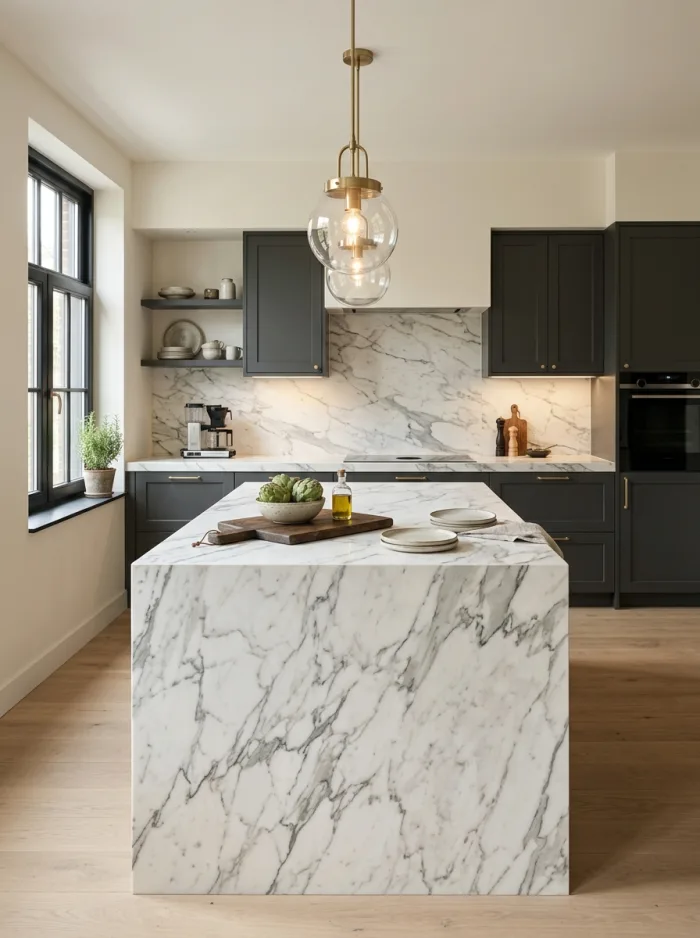
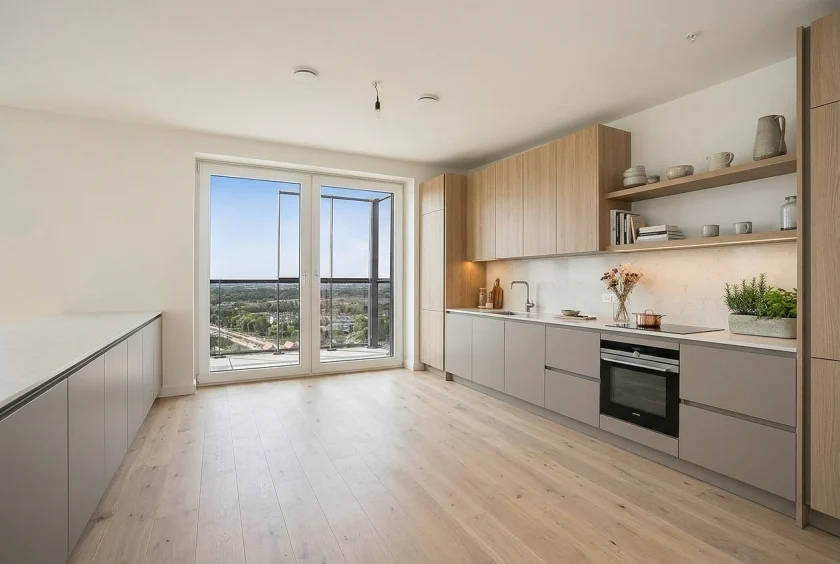
One material gets the lead. Here it is the stone, and everything else stays deliberately quiet. Seeing the full-color version next to a calmer one is the fastest way to tell how far you actually want to take it.
Your space
Does a Quiet Luxury Kitchen Fit Your Space?
This is the one style on this list where square footage genuinely changes what you can pull off, not just how comfortable it feels.
This style needs square footage. A continuous stone surface only earns its keep once you can step back from it, and a waterfall-edge island needs room to walk around. A large open kitchen or a home with high ceilings is where it lands best.
Daylight helps but is not the deciding factor. Deep colors still work in a room with moderate light, as long as the stone itself stays light, since that surface naturally becomes the brightest point in the kitchen.
In a smaller kitchen, pare the style back rather than dropping it. Keep the deep color and the brass, but choose a quieter stone without heavy veining. The presence stays, without the room feeling crowded.
It tends to suit a primary kitchen meant to be seen from an adjoining great room, since the continuous stone and the deep cabinet color read clearly from a distance in a way that busier finishes do not.
Compare
Quiet luxury vs. modern vs. Japandi: how to tell them apart
All three are calm, uncluttered and neutral at a glance. The difference shows up in the materials, the color temperature and the hardware.
Materials
Quiet luxury leans on heavy, veined natural stone and veneer with a visible grain. Modern prefers flat, uniform surfaces: matte lacquer, solid-color quartz, large-format porcelain. Japandi goes for pale white oak, plaster and ceramic with a handmade feel. Veining is the quickest tell. It is the centerpiece in quiet luxury, a quiet background in modern and almost absent in Japandi.
Color temperature
Quiet luxury runs warm and deep: forest green, espresso, taupe, set against a creamy stone. Modern is cooler and more graphic, with charcoal, white and black in clean blocks. Japandi sits in between, with sand, clay and pale wood, and keeps everything light. If the cabinets are dark and the mood is warm, you are in quiet luxury territory. If the whole room is pale, it is Japandi.
Hardware
Quiet luxury uses weighty hardware in brushed brass or bronze, or hides it entirely behind push-open doors. Modern is usually handleless or uses a slim black or steel profile. Japandi favors recessed finger pulls and simple wooden or matte black pulls. Hardware in quiet luxury is meant to be touched, so it has some heft, while in the other two it tries to disappear.
What decides it
Ask where the eye lands first. In modern it is the clean geometry, in Japandi the natural texture and the light wood, and in quiet luxury the stone. A kitchen can borrow from all three, and plenty do. The one that has a single lead material, with everything else held back, is the one you would call quiet luxury.
Palette
The Quiet Luxury Color Palette
A small set of warm neutrals, plus one deep color, and nothing that competes with the stone.
The base is greige or taupe: a gray with enough warmth that it never reads cold next to brass. Walls in a soft plaster or limewash finish add depth without pattern, because the surface shifts slightly with the light during the day.
Warm stone does the rest of the work. Cream, ivory and soft beige marble or quartzite keep the room bright, and their veining gives the eye something to settle on. Pair the stone with one deep cabinet color, such as forest green, navy or espresso, or with walnut veneer.
For metal, choose one finish and repeat it: brushed nickel for a cooler, softer look, or brushed brass and bronze for a warmer one. Mixing two metals starts to look busy, which works against the whole idea.
Budget
Quiet luxury on a budget: where the money matters
The look does not come from spending evenly. A few visible choices carry it, and the rest can stay simple.
The countertop. This is where most of the effect lives, so spend here first. A quartz or ceramic slab with believable veining gets much of the way there for less than natural stone, and it asks less maintenance. Keep the edge simple and keep the finish honed or matte.
The hardware. You touch it every day, and cheap hardware feels light in the hand. Solid, weighty pulls in brushed brass or bronze change how the whole kitchen reads, and they cost little compared with the cabinets.
The faucet. It is one fixture at eye level. A single good faucet in the same finish as the hardware ties the room together.
The lighting. Warm, layered light does more than any material. Dimmable under-cabinet lighting and one sculptural pendant over the island make ordinary cabinets look deliberate. Prefer a warm color temperature throughout so the stone and the paint do not shift tone at night.
Hidden storage. The style depends on clear surfaces. Deep drawers, a tall pantry cabinet and an appliance garage keep the counters empty, and an empty counter reads as expensive on its own.
Save on the parts nobody sees up close: the cabinet boxes and the interior fittings. Stock or semi-custom cabinets with a good finish and well-chosen hardware can look far better than their price. Check current pricing with local suppliers and contractors, since slab and cabinet costs vary a lot by region and by year. Before you commit, try the combination on your own photo in the app to see whether the budget version still holds the look.
How it works
See It in Your Own Kitchen, Not a Showroom
- 1
Take a photo
Photograph your current kitchen or an empty room. That is all the app needs to get started.
- 2
Pick your materials
Choose the cabinets, countertop, backsplash and flooring, or copy the look of a kitchen you like.
- 3
Compare directions
Save the variants side by side and see which one fits your space before you commit to anything.
Frequently asked
About This Style
What does quiet luxury mean in a kitchen?
Luxury without display. No shine, no showy details, no visible branding, but materials that do the work on their own: natural stone with real veining, veneer with a continuous grain, hardware in brushed brass. You only notice it up close.
What colors belong in a quiet luxury kitchen?
Deep, muted tones: forest green, navy, espresso and warm charcoal, set against a lighter natural stone and accented with brass or bronze. The palette stays small on purpose, that restraint is the whole point.
Can I get this look without an expensive natural stone slab?
Yes. Quartz and ceramic with a marble look have gotten close in recent years and are considerably easier to maintain. The style comes down to the combination: a quiet palette, a continuous surface and restrained hardware, more than the price tag of the stone itself.
The images the app produces are AI-generated and give an impression, not a technical drawing. Read how we mark that in the AI transparency notice.
More directions
Other Kitchen Styles
Not quite what you are looking for? Here are the other five directions.
See This Style in Your Own Kitchen
Free to try. Download Kitchen AI and start with a photo.