 Kitchen AI
 Modern
 Scandinavian
 Japandi
 Modern farmhouse
 Industrial
 Quiet luxury
Kitchen style
A Japandi Kitchen, Designed and Seen in Your Own Space
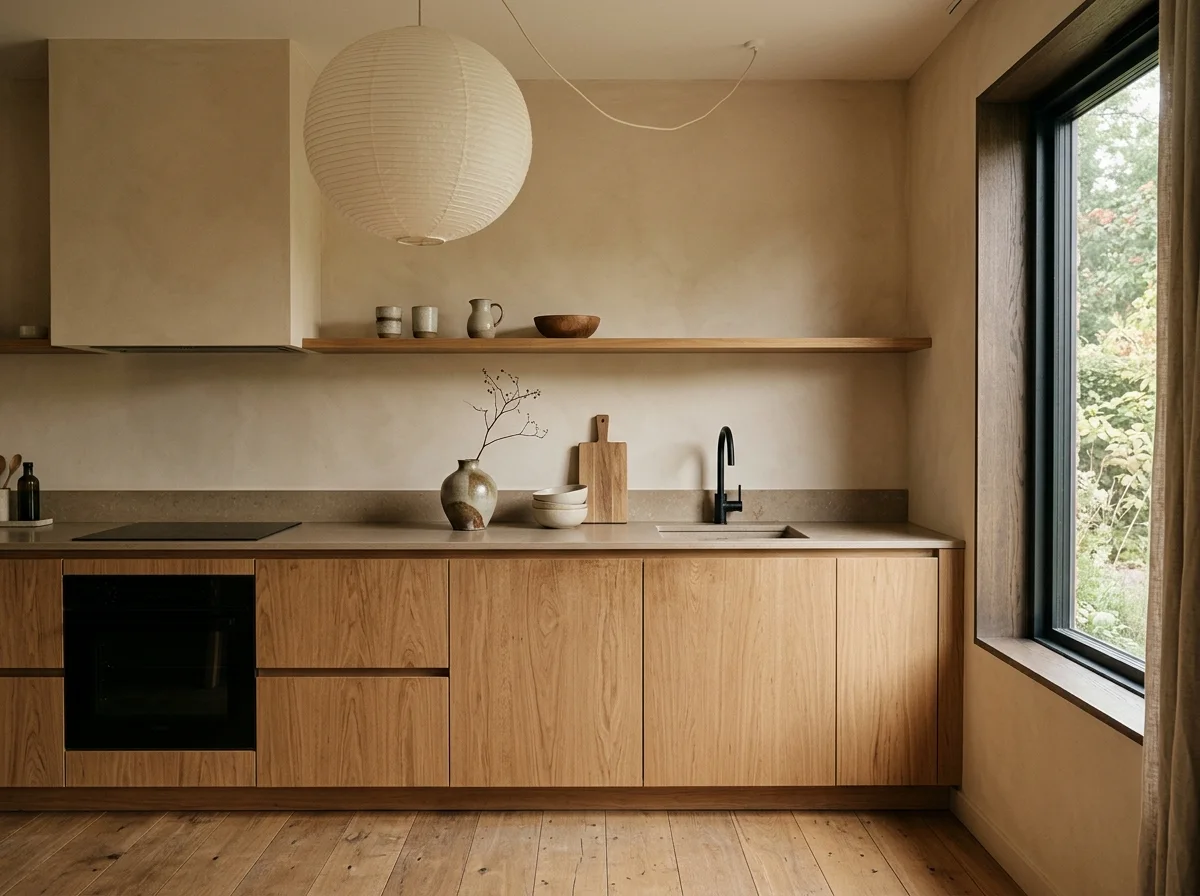
Warm white oak, muted sand tones and a lot of calm. Take a photo of your kitchen and see how Japandi plays out at your place.

Free to try. No account needed.
Features
What Makes a Kitchen Japandi
The name itself is close to the definition: half Japanese restraint, half Scandinavian warmth, worked into one narrow, considered palette. It has become one of the most searched kitchen styles in the last couple of years, and for good reason.
Japandi is what happens when Japanese minimalism meets Scandinavian warmth. The discipline comes from the first: few lines, few objects, everything with a place. The wood and the softness come from the second, which keeps it from ever feeling clinical.
The palette stays inside a narrow band of earth tones: sand, clay, warm gray, off-white and the natural color of white oak. There is almost no contrast in it, and that is the point. The calm comes from everything sitting close together.
Materials are meant to be felt. Plastered walls with a light texture, wood with an open grain, ceramics with an uneven glaze. It is minimalism, but built on texture instead of shine.
Lighting stays low and warm rather than bright and even. A single paper or linen pendant hung low over the island does more for the mood than a row of recessed can lights ever will.
Materials
What a Japandi Kitchen Is Built From
These are the combinations that come back most often in this style. In the app you choose them separately, so you can also change just one element.
Cabinets
White oak or ash veneer with a visible, quiet grain, either handleless or with a routed finger pull. Let the grain run across several cabinets where you can, it settles the whole wall instantly. A hand-applied lacquer or a natural oil finish keeps the surface matte enough that the grain stays the star, not the sheen. Wood fronts have moved back into the mainstream too; are wood kitchen cabinets back in style looks at which woods and tones are rising.
Countertop
A muted stone look with no strong veining: microcement, a concrete look, or a sand-colored quartz. No mirror finish, something your hand wants to rest on instead. Ask for a leathered or honed finish rather than polished, since a mirror surface pulls the room toward modern instead of Japandi.
Backsplash
Plaster or microcement in the same tone as the wall, so there is no visible break. A single open white oak shelf in front is decoration enough. A troweled, hand-finished texture reads more Japandi than a perfectly flat, sprayed wall, even in the same neutral tone.
Flooring
Wide-plank white oak, natural or lightly smoked. Warm in color but not dark, so the floor stays part of the wood cabinets instead of competing with them. Ask your installer to run the boards the long way through the room, since that quietly reinforces the sense of width the style relies on.
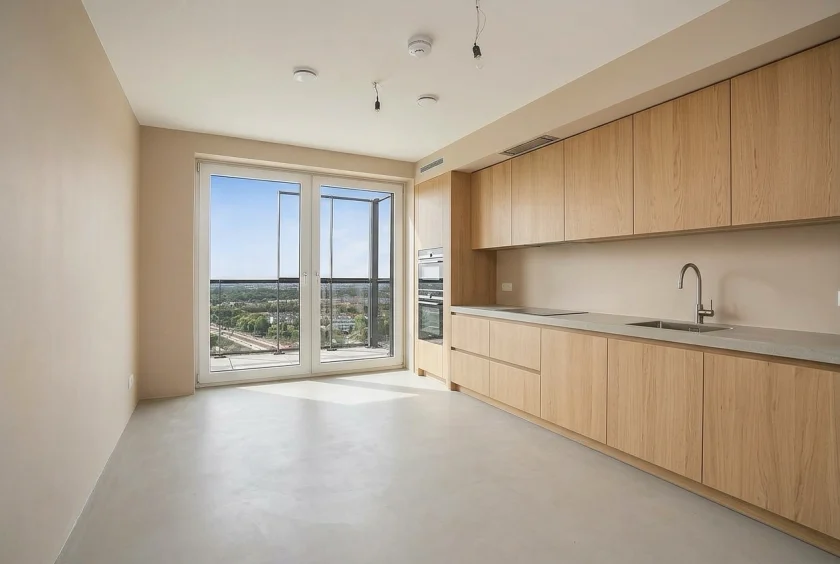
Everything in the same key. Wood, wall and countertop sit close together, and that closeness is what creates the calm. It is a small enough shift that you can test it against your current kitchen in the app before changing anything.
Your space
Does a Japandi Kitchen Fit Your Space?
This is the style most sensitive to what is already happening in the room next door, since so little of it is about the kitchen in isolation and so much of it is about how the spaces read together.
Japandi asks for width, not necessarily square footage. It works best where walls can stay mostly bare, since emptiness is part of the style. A kitchen built out to the ceiling on every wall loses a lot of what makes it work.
The style is forgiving about daylight. Because the tones are warm rather than cool, a room with limited light still feels pleasant, where stark white would turn gray fast.
What to watch is the rest of your home. Japandi does not sit well next to a lot of color. If your living room is full of bold tones and busy patterns, the kitchen will feel at odds with it. In that case, put a warmer or more neutral variant side by side before you commit to anything.
In an open floor plan, keep the sightline in mind: whatever sits across the room, in the dining or living area, should share the same warm, muted family of tones, or the calm breaks the moment you step back far enough to see both spaces at once.
How it works
See It in Your Own Kitchen, Not a Showroom
- 1
Take a photo
Photograph your current kitchen or an empty room. That is all the app needs to get started.
- 2
Pick your materials
Choose the cabinets, countertop, backsplash and flooring, or copy the look of a kitchen you like.
- 3
Compare directions
Save the variants side by side and see which one fits your space before you commit to anything.
Frequently asked
About This Style
What exactly is a Japandi kitchen?
A kitchen that pairs Japanese minimalism with Scandinavian warmth. Few lines and few objects, but built in warm wood and soft earth tones, so it reads calm rather than severe.
What colors belong in a Japandi kitchen?
A narrow palette of earth tones: sand, clay, warm gray, off-white and the natural color of light or lightly smoked white oak. Contrast stays deliberately low, since that is where the calm comes from.
Can I combine Japandi with my existing kitchen?
Often, yes. Since the style is mostly about material and color rather than layout, new cabinets and a new backsplash alone can take you most of the way. In the app you can try exactly that: keep your countertop and floor as they are and change only the cabinets.
The images the app produces are AI-generated and give an impression, not a technical drawing. Read how we mark that in the AI transparency notice.
More directions
Other Kitchen Styles
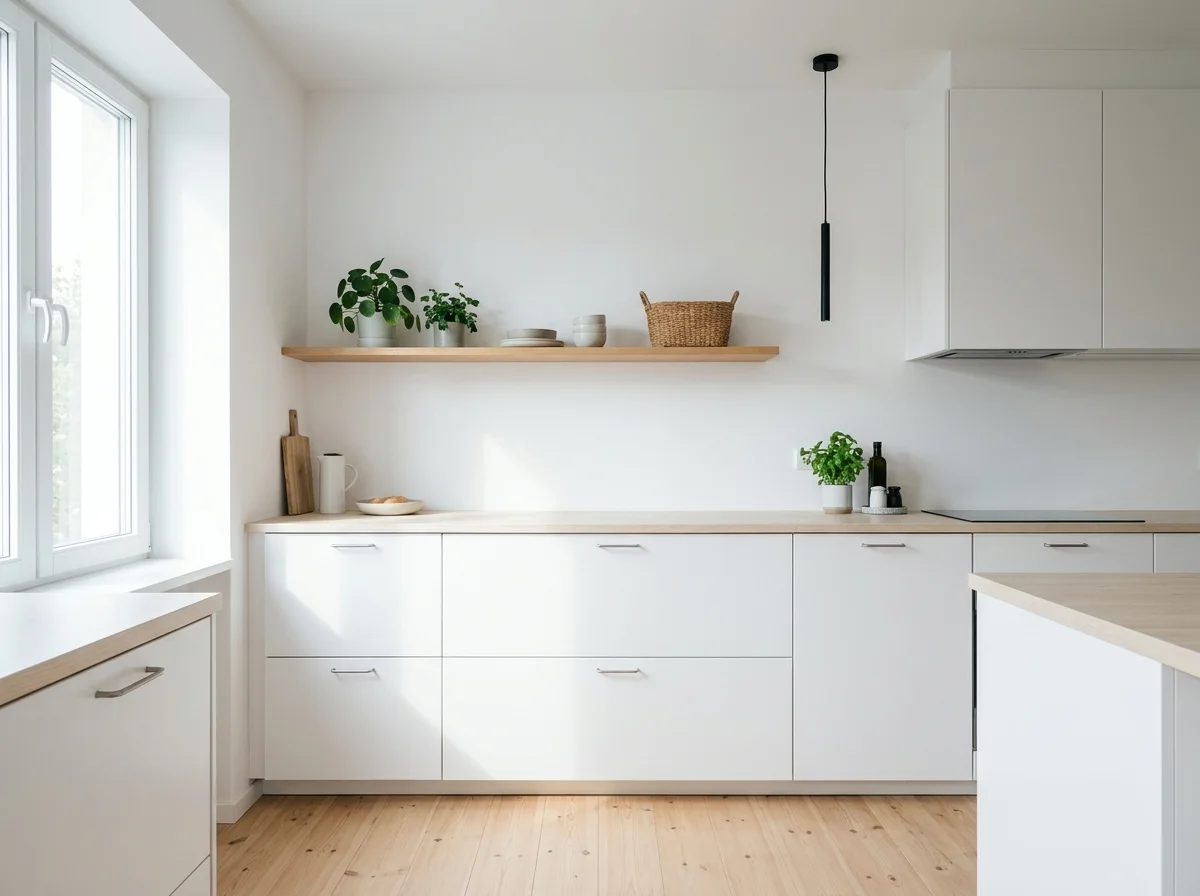
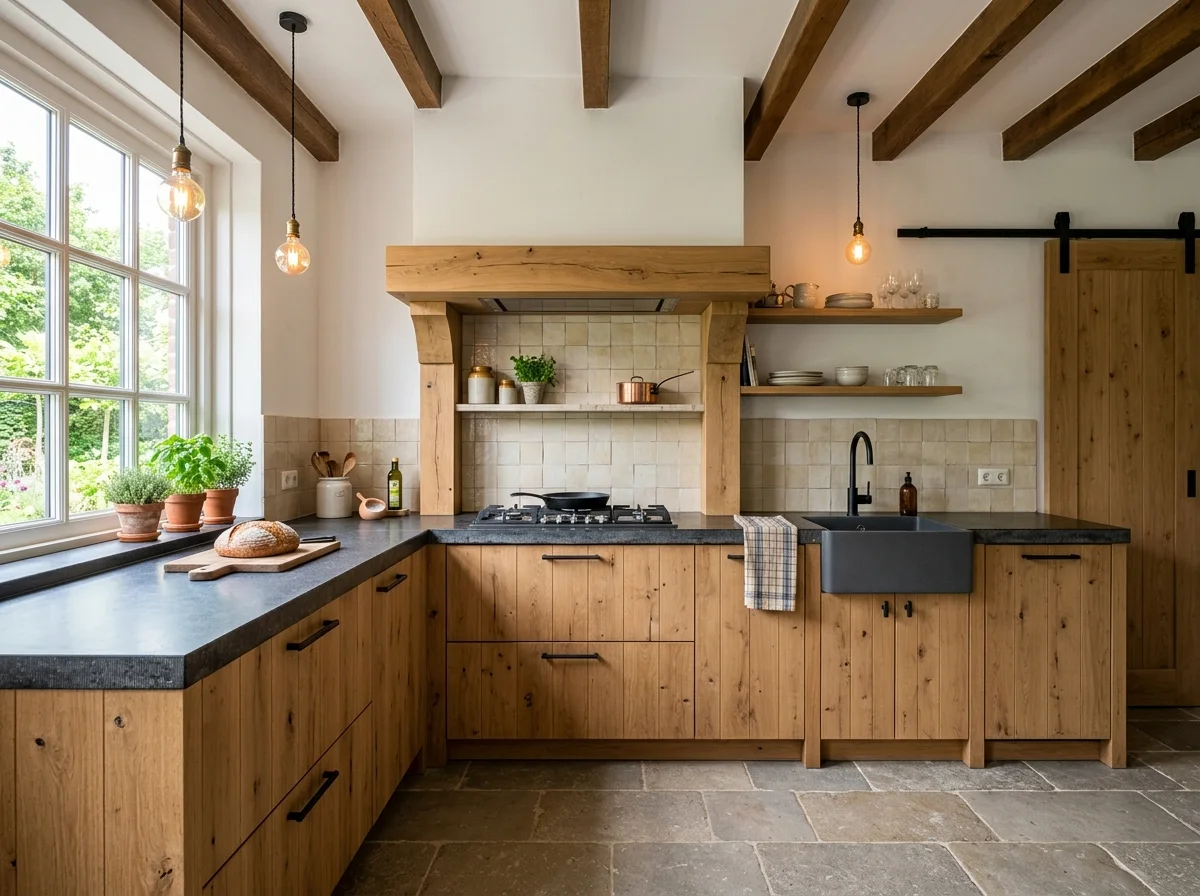
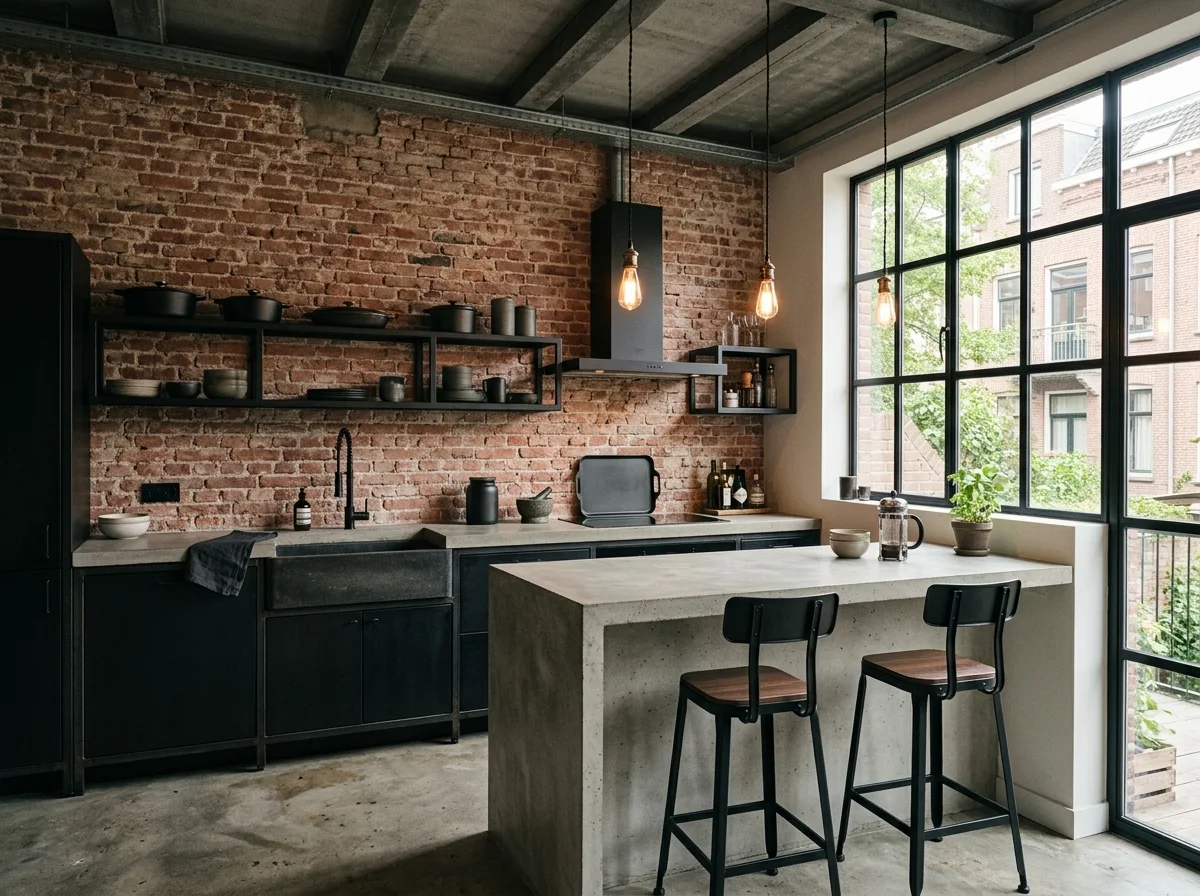
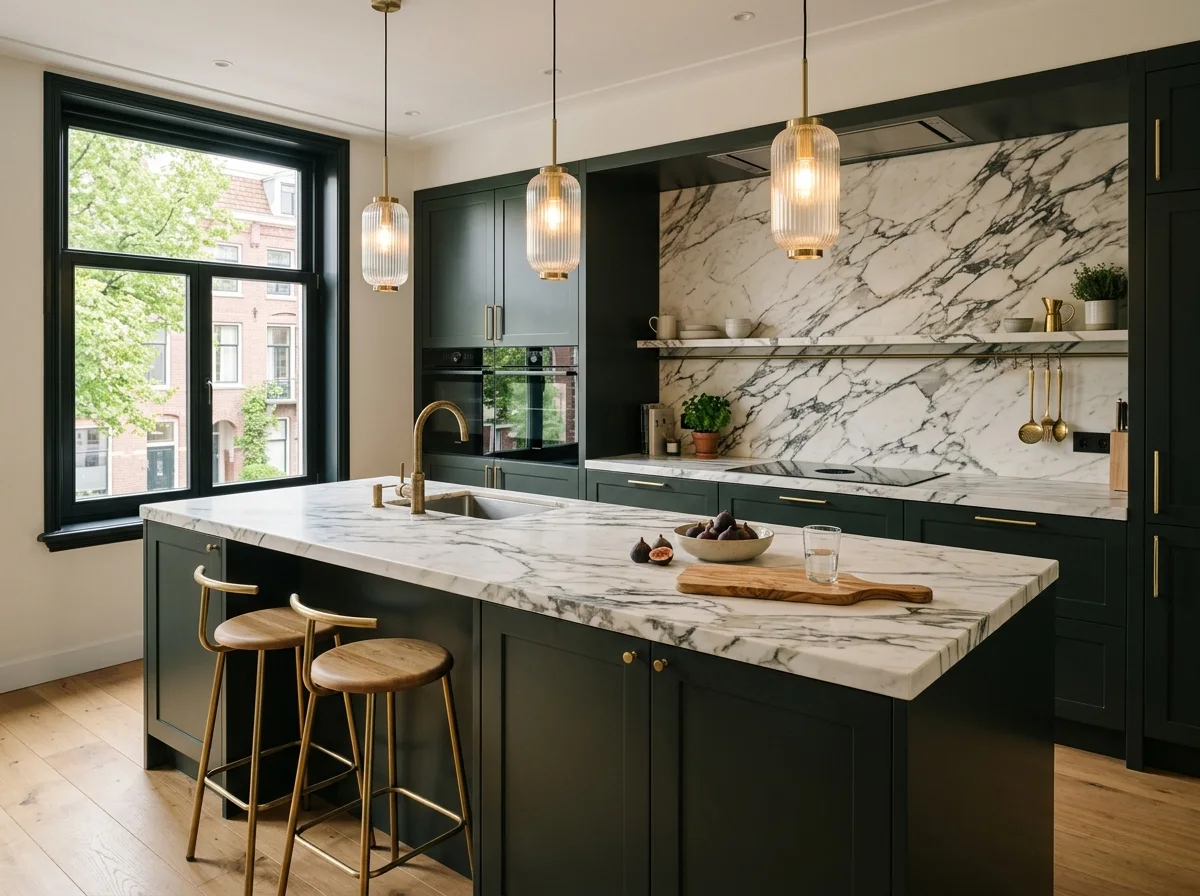
Not quite what you are looking for? Here are the other five directions.
See This Style in Your Own Kitchen
Free to try. Download Kitchen AI and start with a photo.