 Kitchen AI

 Modern
 Scandinavian
 Japandi
 Modern farmhouse
 Industrial
 Quiet luxury
- Color decisions
- Oak floors
- See it first
Kitchen Cabinet Colors That Work With Oak Floors
White, black, green and plain wood tone can all work with an oak floor. What actually decides it is undertone and contrast, not a fixed rule about warm and cool. We ran six cabinet colors through the same oak-floored kitchen so you can see what changes before you pick one for your own.

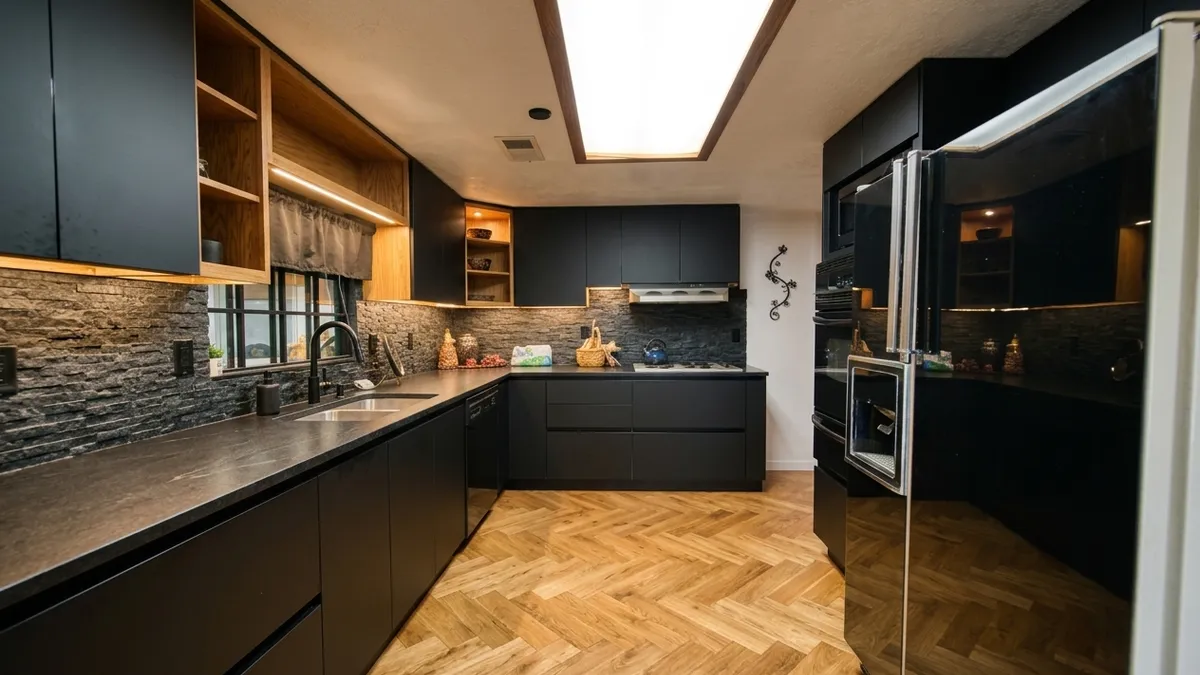
Same kitchen, same skylight, same layout as every photo in this article. Only the cabinet color and the floor finish change.
Free to try. No account needed.
Almost any cabinet color can work with an oak floor: white, black, green, blue and plain wood have all worked in kitchens we've tested. What actually decides it is undertone (a warm honey floor clashes with a red-toned cabinet more than with a cool one) and how much contrast you want between the two. A busy floor pattern, like herringbone, also makes a bold cabinet color read as busier than the same color on plain planks. Test your own floor against your own color before you order anything; the six examples below show what changes and what doesn't.
Most "what color goes with oak floors" guides answer for oak cabinets, not oak floors, and the two aren't the same question. Cabinets are close to the eye and read as the room's main color; a floor is a large, low, warm-toned plane that every cabinet color has to sit on top of. We photographed one dated 1990s kitchen and ran six different cabinet colors through it, keeping the room itself untouched, to see what an oak floor actually does to each one.
What actually decides if a color works
Oak, whatever the finish, leans warm. Even a bleached or "white oak" floor carries yellow or pink undertones once it's under real light, and a honey or golden oak floor carries them strongly. Two things decide whether a cabinet color sits comfortably on top of that warmth, or fights it. If the whole kitchen reads cold rather than just the floor-and-cabinet pairing, warm modern kitchen: six fixes covers the wood tone, the white and the light together.
- Undertone. Cool colors (true white, charcoal, sage, most blues) contrast with the floor's warmth on purpose, which reads as intentional. Warm-leaning colors in the same family as the floor (cream, honey wood tones, warm greige) blend instead of contrasting, which reads as calm rather than "matchy" as long as the tones are close, not identical.
- Contrast and pattern. A high-contrast color (matte black, deep navy) makes the floor's grain and color more visible by comparison. A busy floor pattern, like a herringbone or chevron lay, adds visual noise under a bold cabinet color; the same color on wide, plain planks reads calmer.
Lighting changes both of these more than most people expect. A north-facing kitchen with little direct sun keeps an oak floor looking closer to its true color; strong afternoon sun from the west can push it noticeably more orange for a few hours a day. See your own room at the time of day you actually cook in it before you decide.
Six cabinet colors, one oak floor
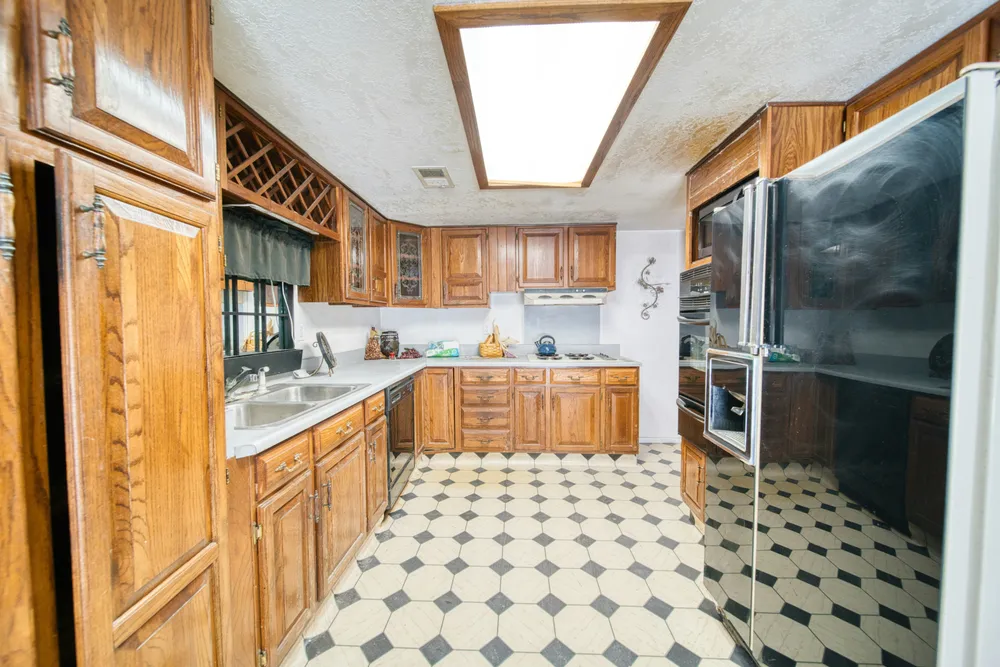
We kept the room, the skylight, the window, the appliances and the layout exactly as they are and ran six cabinet colors through the app one at a time: white, off-white, black, dark green, and a plain wood tone. Four of the six also swap the floor to a wood look as part of the overall style, from wide oak planks to a herringbone lay. If you want to test a cabinet color specifically against the oak floor you already have, upload your own photo and leave flooring untouched while you cycle through cabinet colors; the app lets you change the two independently.
White and off-white on oak
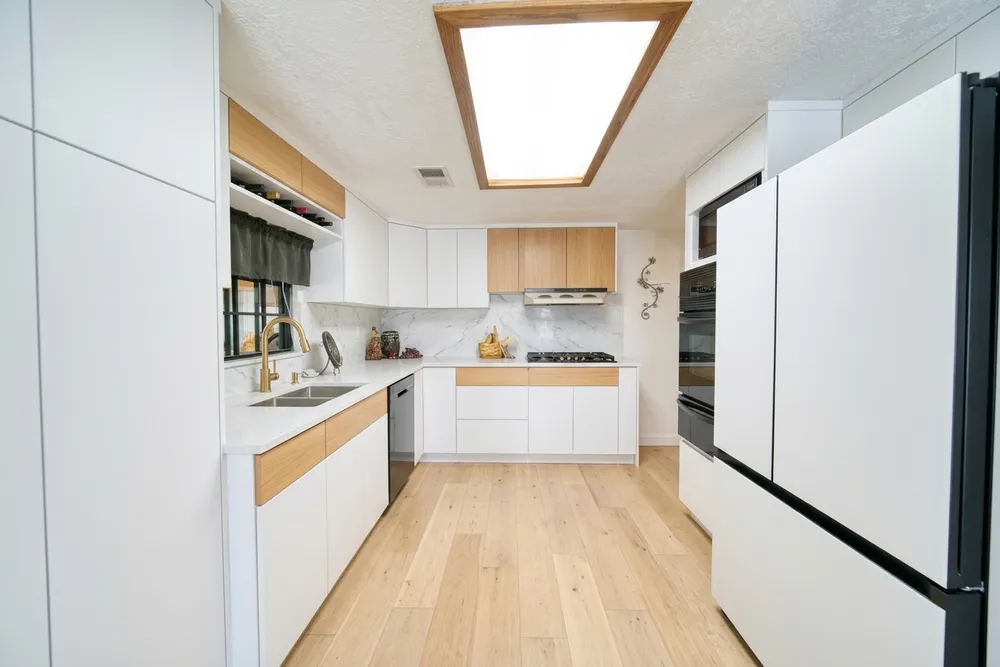
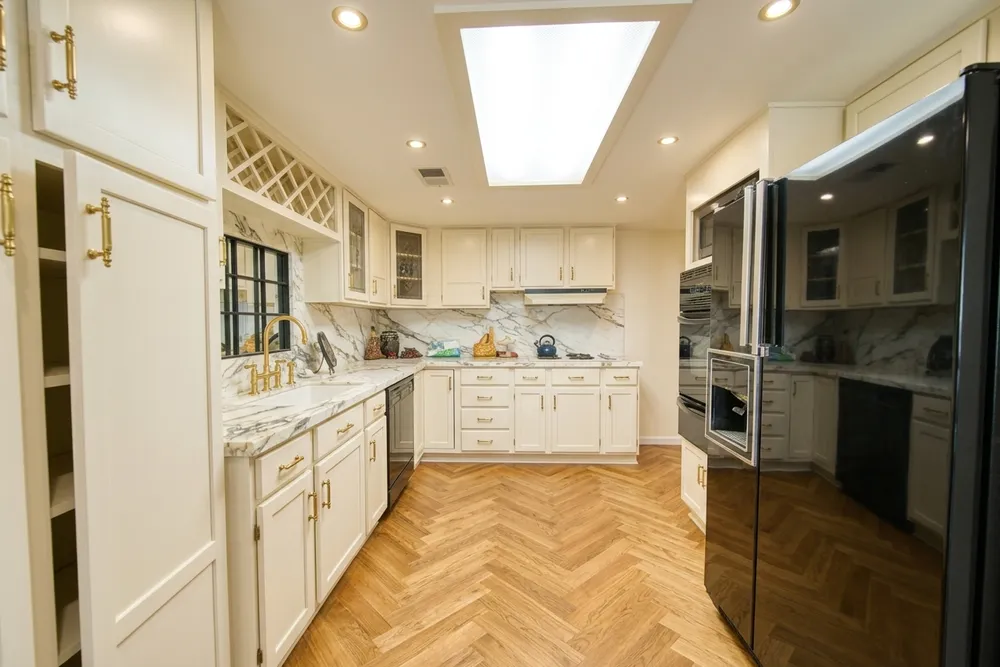
Both of these are "white" in the paint chip sense, and they behave completely differently next to oak. The cool white cabinets keep their own identity against the wide-plank floor: the contrast is obvious and the kitchen reads modern. The ivory cabinets are warm enough to sit in the same family as the floor and the marble's veining, so the whole room reads as one warm palette instead of white-against-wood. Neither is more correct; they're two different decisions about how much contrast you want. If a crisp, contrast-forward white is closer to what you're after, the modern kitchen style guide covers what else usually goes with that look.
Black cabinets on an oak floor
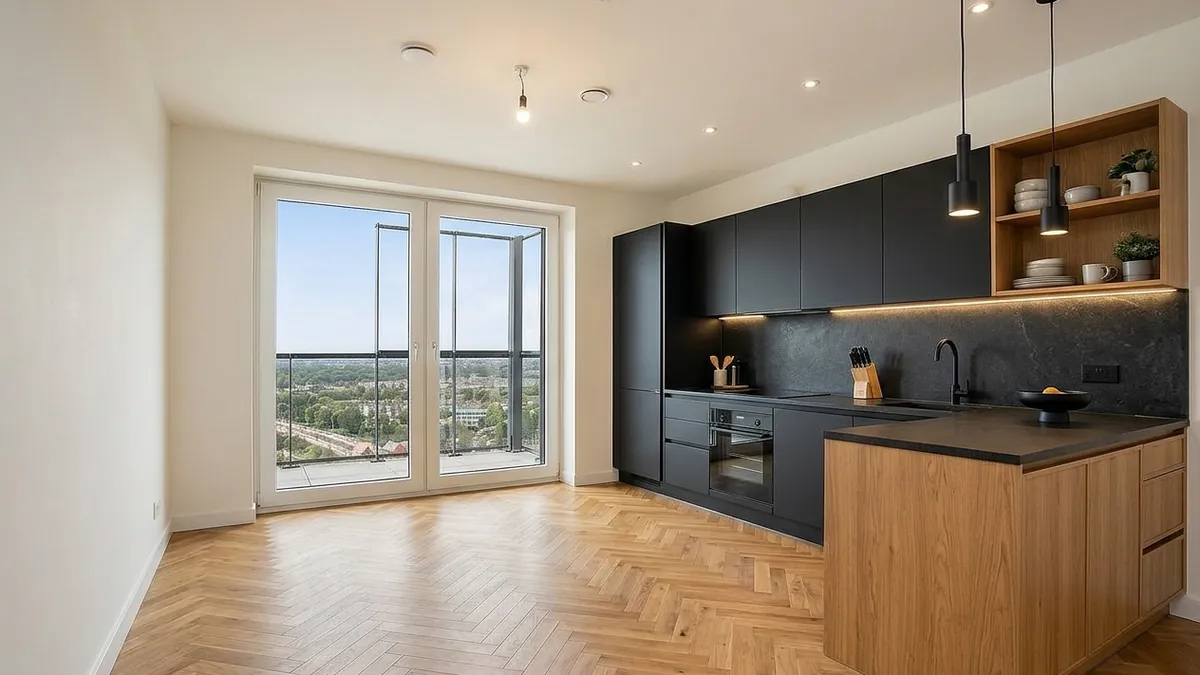
The hero photo at the top of this article is the same kitchen in matte black, paired here with a herringbone oak floor and a stacked stone backsplash. Black is the highest-contrast option of the six, and it's also the one where the floor's pattern matters most: the herringbone lay is much more visible next to black than it was next to the lighter colors, because there's nothing warm nearby to soften it. The stone backsplash and the warm floor tone are doing real work here to keep the kitchen from feeling cold. If you're specifically weighing whether black goes too dark in a smaller or dimmer room than this one, we cover that in more depth, including small galley kitchens and rooms with little natural light, in are black kitchen cabinets too dark.
Green and other bold colors
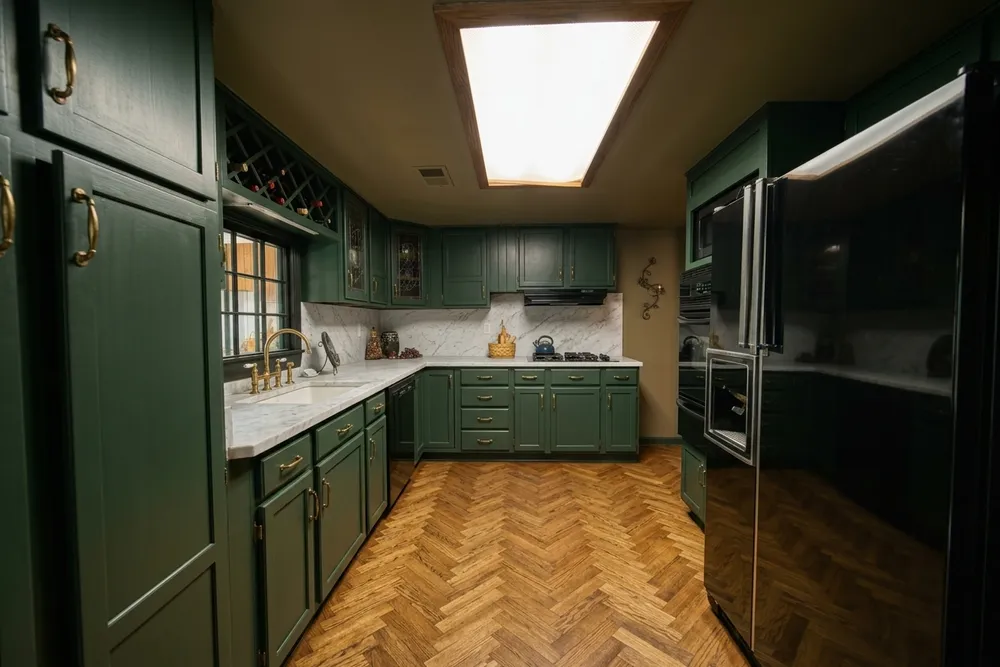
Dark green is closer to black than it looks on a paint chip once it's under real light, so it inherits the same contrast benefits and the same floor-pattern visibility. What keeps it from feeling heavy here is the brass hardware, which picks up the warmth of both the green and the floor, and the white marble backsplash, which is the one genuinely cool surface in the room. We only tested green in this room, but the same logic applies to a deep blue or navy: a cool, saturated color needs at least one clearly cool surface elsewhere in the kitchen (countertop, backsplash, or wall) to keep an oak floor from tipping the whole room warm.
Wood-tone cabinets on an oak floor
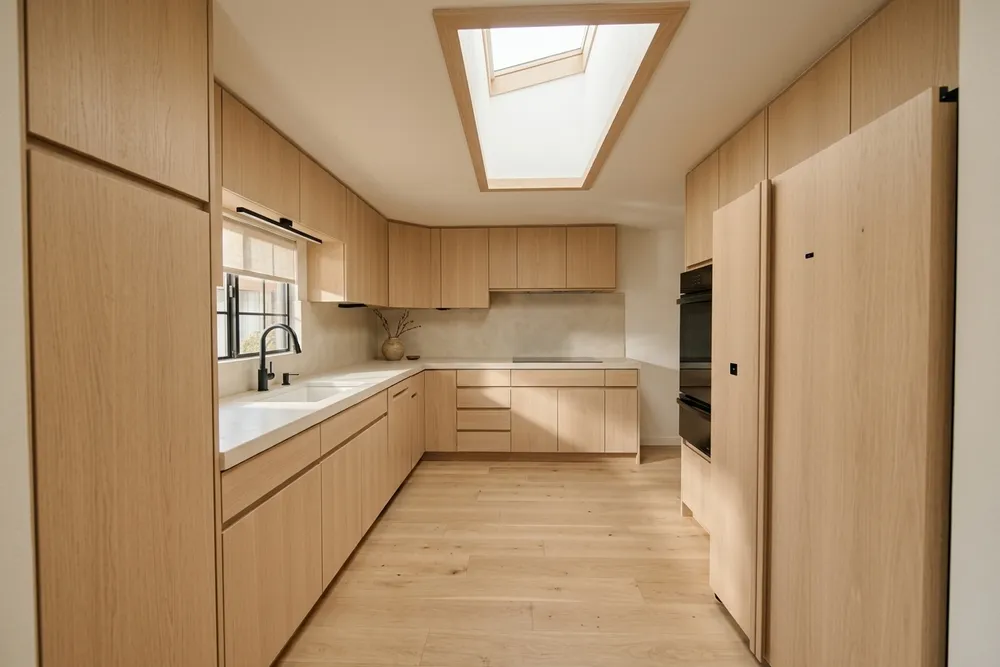
Matching a wood-tone cabinet to a wood-tone floor is the pairing people worry about most, and it's also the one that works more often than expected, as long as the two aren't cut from the exact same board. Here the cabinet grain runs a different direction than the floor planks and the finish is slightly flatter, which is enough separation to read as "wood kitchen" rather than "one wood surface accidentally continuing into another." If your existing floor and your planned cabinets are close in tone, testing this pairing on your own photo first is the cheapest way to find out whether yours has that separation or not; the app has 14 flooring finishes and 22 cabinet colors and materials to try against each other.
What the app can't do
The app can't tell you whether your actual floor is solid oak, engineered oak, or an oak-look laminate; it works from the photo, and a laminate close-up can look identical to real wood in a render. It doesn't hand you a paint code or a specific SKU, it doesn't estimate cost, and it doesn't move cabinets, walls or windows: the room's layout stays exactly as you photographed it. Whether new fronts on your existing boxes are enough or the cabinets themselves need to go is a separate decision, covered in cabinet refacing vs. replacing. Every result is an AI impression of how a material reads in your space, not a swatch you can hold up to a shelf sample, so still check a real sample under your own lighting before you order paint or cabinets.
Frequently asked questions
Does a dark cabinet always clash with a light oak floor?
No. Contrast between a dark cabinet and a light floor is a design choice, not a mistake, and it's one of the more common pairings in current kitchens. It reads as a problem mainly when the countertop or backsplash also swings dark, leaving nothing light in the room except the floor and the ceiling.
What about a reddish "honey oak" floor from the 1990s or early 2000s?
A strongly red or orange oak floor limits warm cabinet colors more than a pale or gray-washed oak does, since two warm, similarly saturated tones next to each other can compete instead of blending. Cooler colors, or a warm color with a clearly different value (much lighter or much darker than the floor), tend to work more reliably against a reddish floor.
Should the countertop match the floor or the cabinets?
Neither, usually. A countertop that's close in tone to both the floor and the cabinets tends to disappear into the room; one that contrasts with at least one of the two gives the eye a clear break between surfaces. In the pairings above, the marble and stone backsplashes are doing that job.
Can I test a cabinet color against the oak floor I already have?
Yes. Upload a photo of your own kitchen, choose a new cabinet color, and leave flooring set to your existing floor. Cabinet color, countertop, backsplash and flooring are four separate choices in the app, so you can change just one and keep the rest exactly as it is.
See it before you order a sample
A paint chip or a cabinet sample under showroom lighting doesn't tell you how a color reads against your actual floor, in your actual light. Photograph your kitchen, pick a cabinet color, and see the two together before you spend money confirming what a photo could have told you first.
Published September 1, 2026. The images in this article were made with Kitchen AI and are an AI impression, not a technical drawing. How we mark that.
I build Kitchen AI on my own: the app that shows your own kitchen in a different style. For these articles I test everything in real rooms, with real photos, and write down what happens. Something wrong, or missing? Let me know.