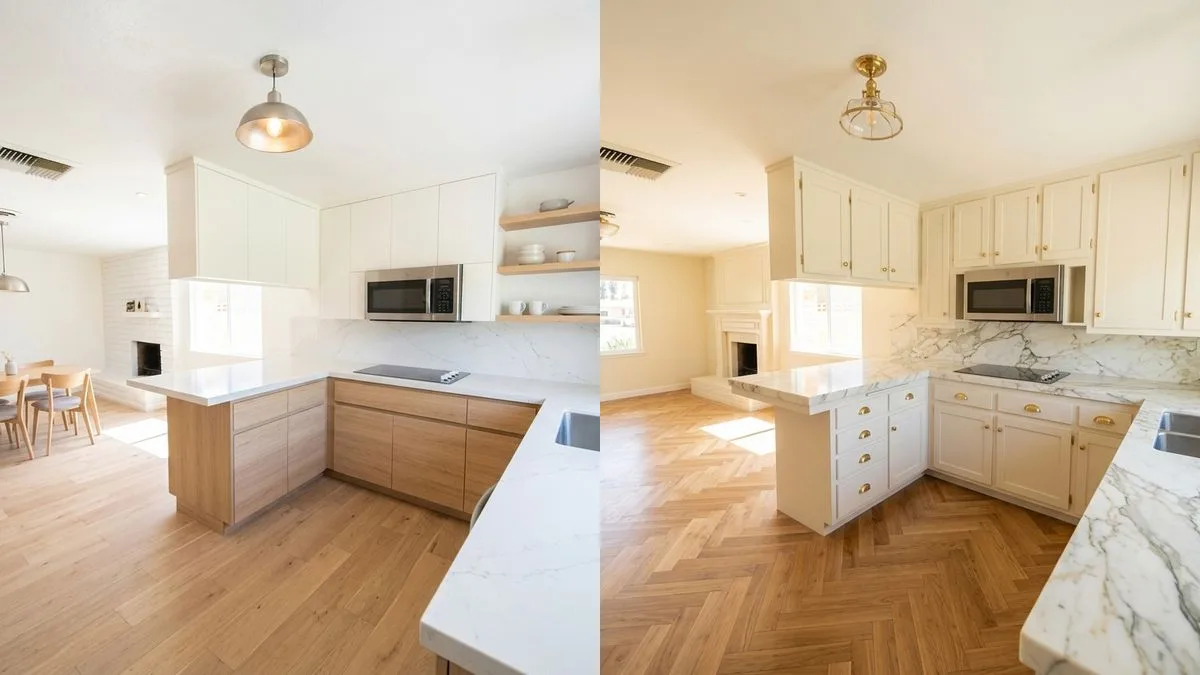
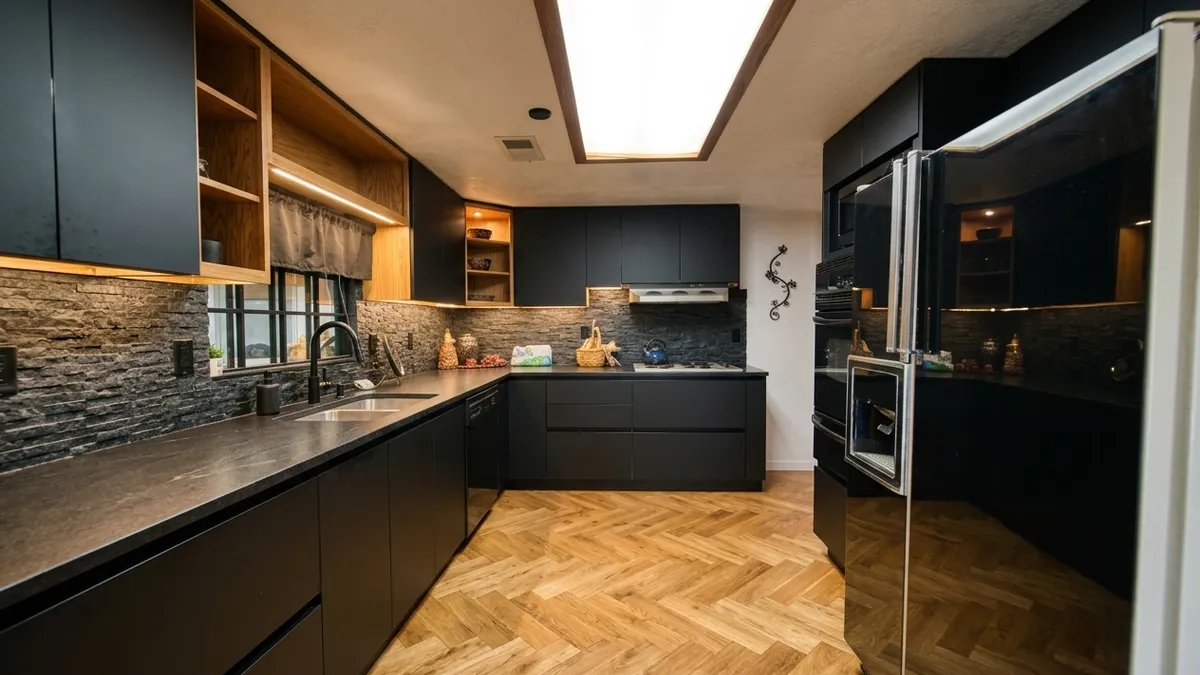
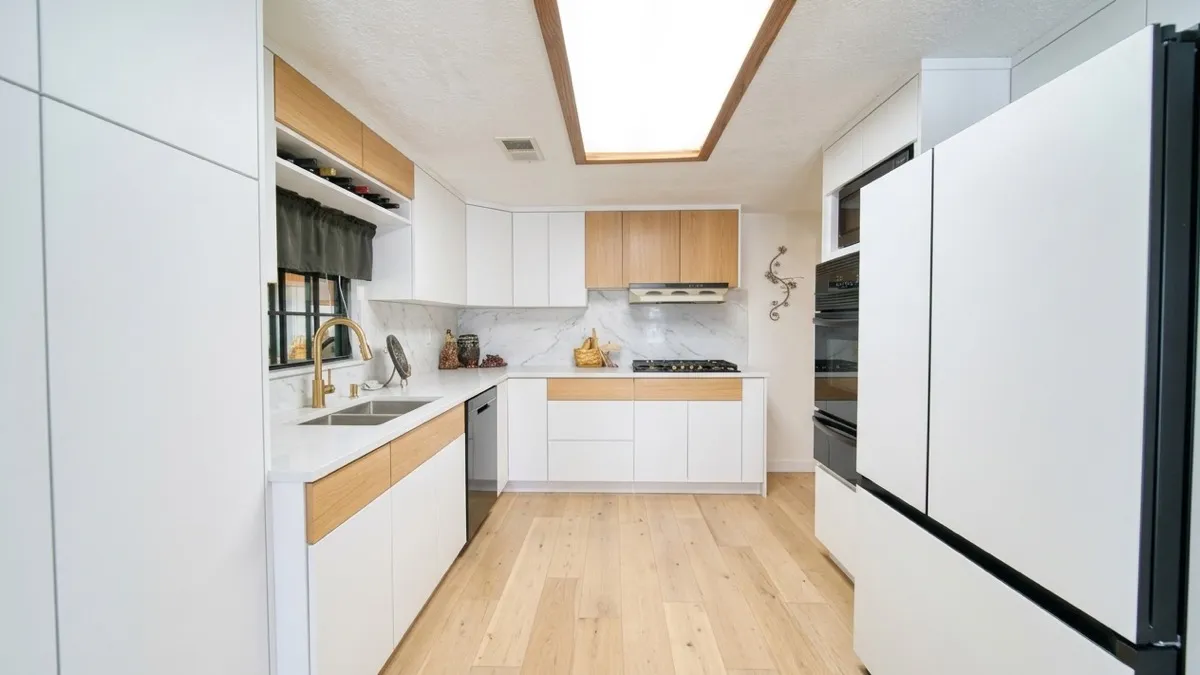
 Kitchen AI


 Modern
 Scandinavian
 Japandi
 Modern farmhouse
 Industrial
 Quiet luxury
- Rental kitchens
- Removable upgrades
- Deposit and lease
Rental Kitchen Makeover: Keep Your Deposit
A checklist of rental kitchen upgrades sorted by how easily they come off: what is safe, what needs your landlord's written permission, and what to leave alone. Tested on one apartment kitchen in five finishes.

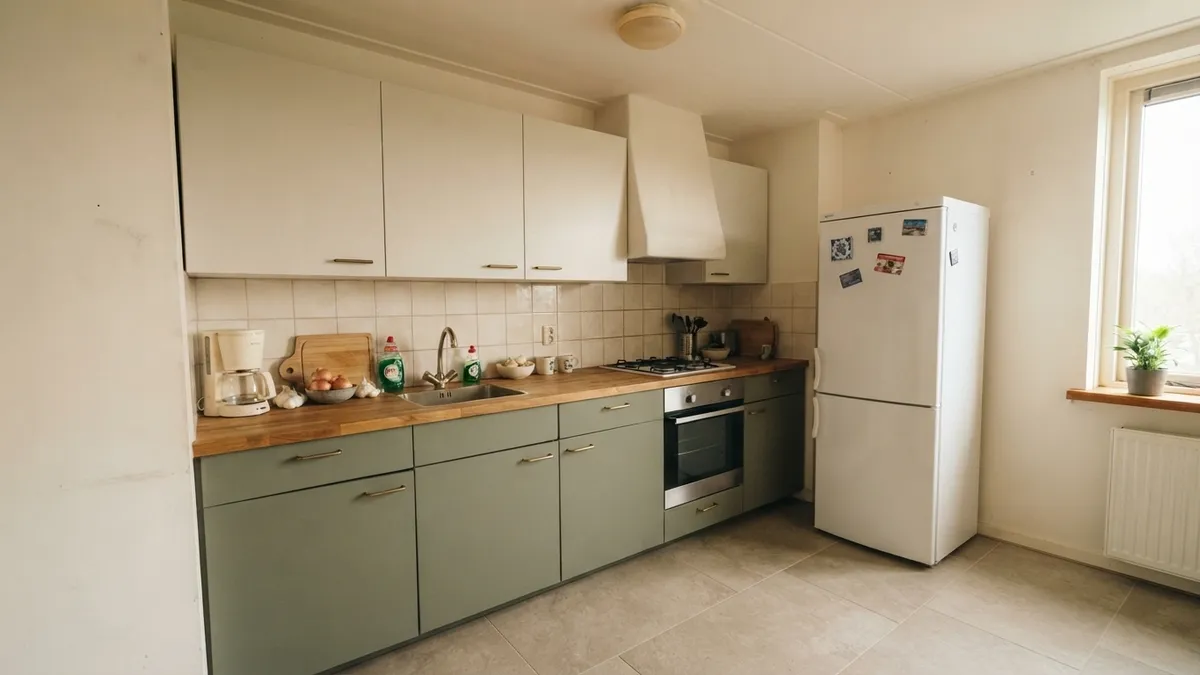
The same apartment kitchen redone with sage green lower cabinets, cream upper doors, an oak countertop and new floor tiles. The wall tiles keep their original layout. Of everything in this picture, only the front colors and pulls could be a renter's change.
3 free designs. No account needed.
Most rental kitchen makeovers come down to one test: can you undo it by moving day? Peel-and-stick tile, swapped hardware, plug-in lighting and freestanding pieces can. Painting cabinets, replacing countertops or flooring, and drilling into tile need your landlord's written permission first. Deposit rules vary by state, and your lease decides the rest.
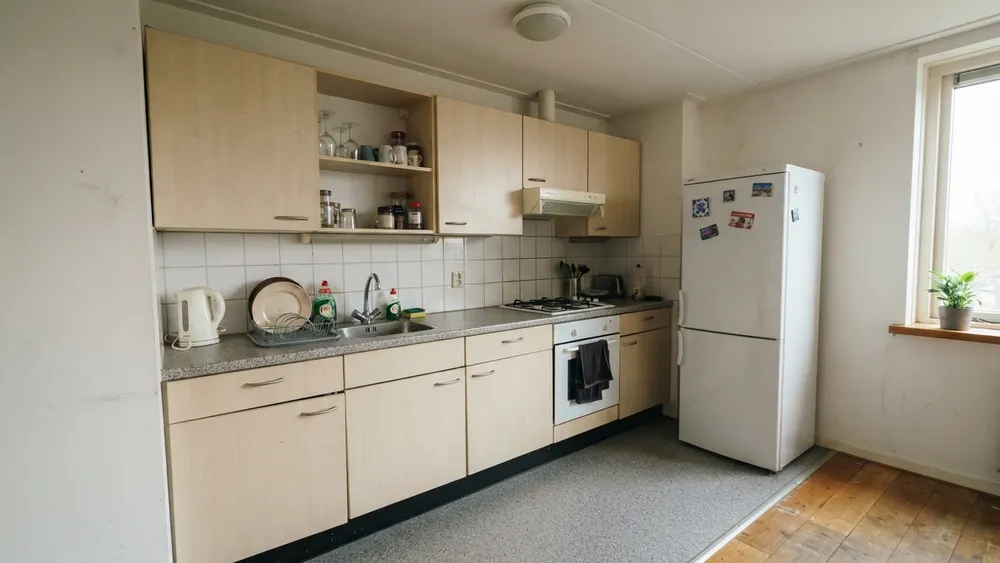
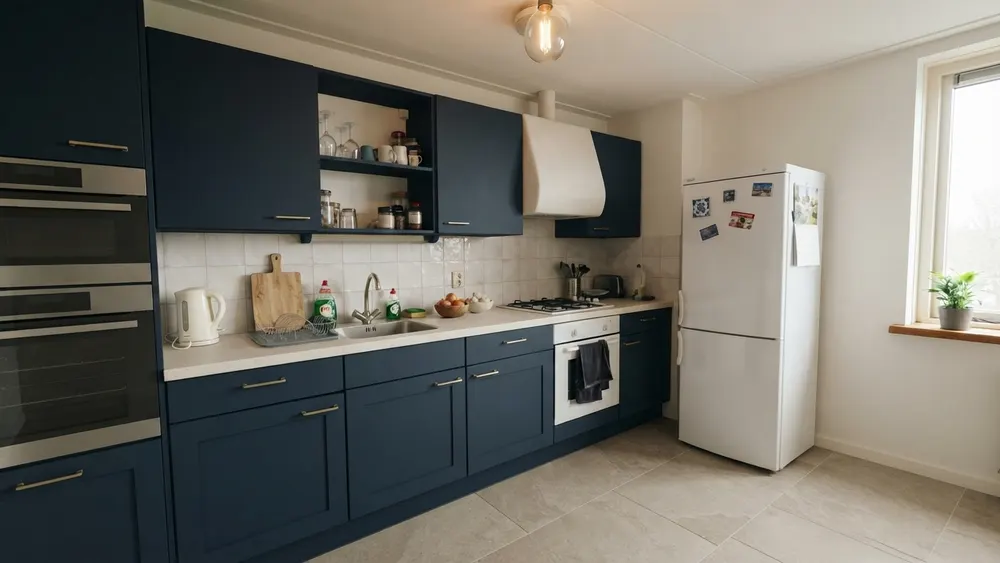
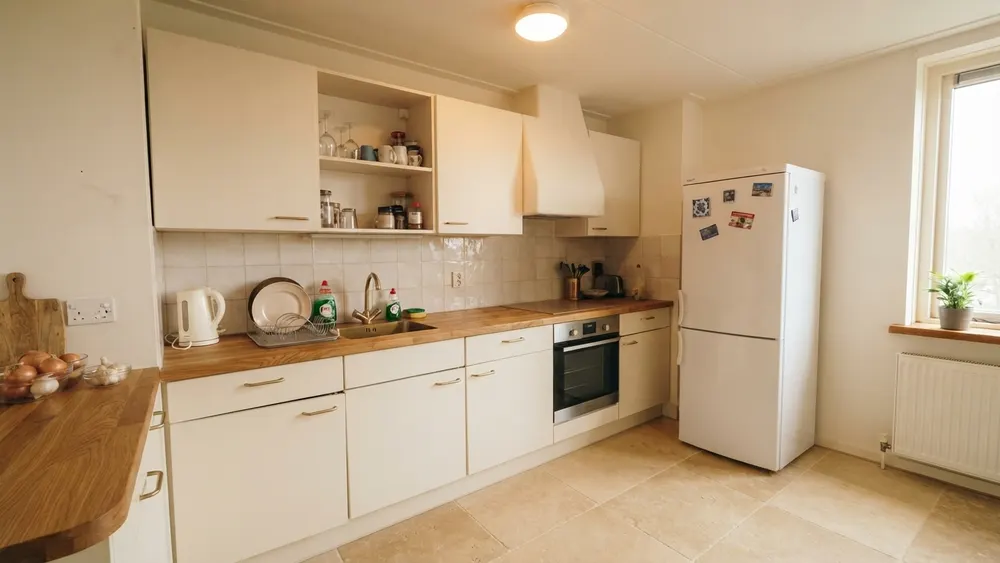
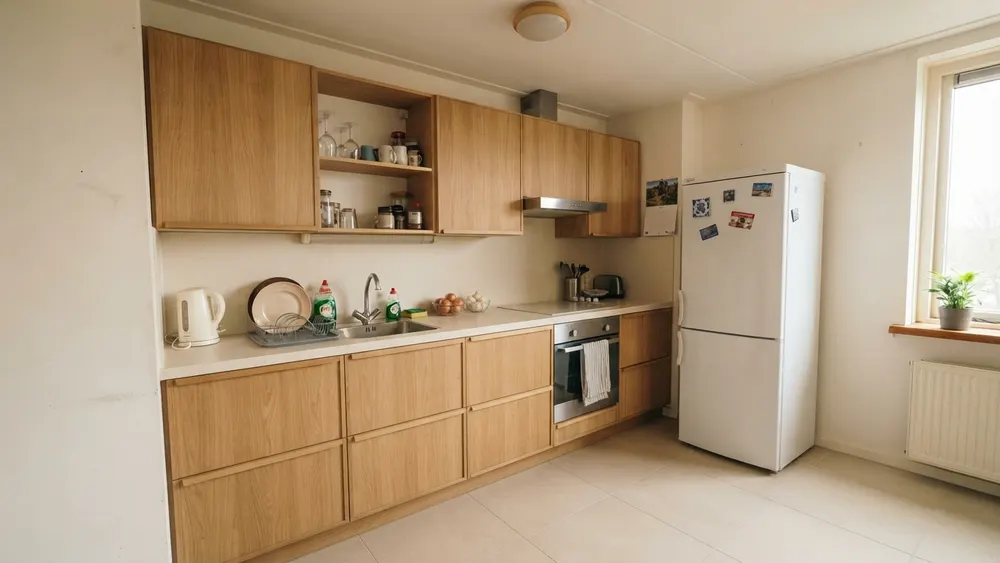
To see how far a change can go, I ran one photo of a dated apartment kitchen through five finishes in Kitchen AI, always from the same camera position. It is a single straight run with four upper doors, an open shelf unit, a window on the right and a freestanding fridge. Four of the five results are below, with exactly what changed in each. Not all of it is something a renter could do, and that gap is most of this article.
The rule: what you can undo by moving day
Two things decide what you can do: your lease and your state's deposit law. Many leases forbid alterations without the landlord's consent, so read that clause before you buy anything. On the deposit side, a landlord can generally use it to restore the unit to its condition at move-in, but not for ordinary wear and tear (Nolo's renters' rights guide). California's Civil Code 1950.5, for example, allows deductions for "the repair of damages to the premises, exclusive of ordinary wear and tear," and caps most deposits at one month's rent. Other states set different caps and deadlines.
The practical reading: an upgrade you chose is a change, not wear, so the lease clause matters more than the statute. This is general information, not legal advice.
Before you touch anything:
- Photograph the kitchen as it is, with the date visible in the file.
- Ask in writing for anything beyond the first list below. An email counts. Say what you want to do, how it comes off, who pays for restoring it, and whether the landlord wants it restored or left in place at move-out.
Fully removable: the safest upgrades
I only quote a price where I found a source. Everything else scales with how many cabinets, tiles or feet you cover.
- Swap the hardware. Unscrew the pulls, bag the originals with their screws, and put them back at move-out. Match the hole spacing of the old pulls, or you add holes. No sourced price.
- Plug-in or battery lighting. Under-cabinet strips need no wiring. Anything hardwired belongs in the permission list.
- Freestanding pieces. A cart, a rolling island, open shelving, a rug. They leave with you and touch nothing.
- Peel-and-stick tile for the backsplash. Sources disagree here, so test first. The manufacturer Smart Tiles says its tiles "usually come away cleanly," but that the result "can depend slightly on the quality and condition of the paint underneath," and that on older or unprimed walls "you might see a bit of paint lifting" (Smart Tiles, undated). A renter who installed a peel-and-stick tile backsplash warns it is "not typically removable" because the glue is "extra strong," and puts contact paper on the wall first to keep the adhesive off the paint (The Homes I Have Made, May 2023). Do a small patch somewhere hidden and leave it for a few weeks before you commit.
- Peel and stick on kitchen cabinets. Adhesive film or contact paper is the one cabinet change that can be reversible. One renter covered ten doors with six rolls for under $15 over a weekend, and it was still in good shape nearly a year later, apart from some sagging behind the stove that a hair dryer fixed (Domino, updated September 2023). The risk is on the way off. Removal usually means low heat from a hair dryer, but high heat can damage a veneer or finish, so test a hidden spot first (Hunker, updated September 2020). I have not tested real film on these fronts, only the render below.
Needs written permission first
Can I paint cabinets in a rental?
Only with your landlord's okay, and get it in writing. Paint is the textbook case of a change you can't take off again: sanding it back to the original means redoing the surface, and a fresh paint job is not ordinary wear. Some landlords agree if the color is neutral or you offer to repaint at move-out. Ask before you buy a gallon, and put the agreed outcome in the same email.
The rest of this tier works the same way. If it isn't clearly removable, ask first:
- Replacing cabinet doors or drawer fronts. The originals have to be stored and come back, unless the landlord agrees they can go.
- Countertop or flooring. Both are large, expensive to restore and rarely what a lease means by "decorating."
- Faucet, sink or hardwired lighting. They connect to plumbing or wiring. Ask who does the work, and if your landlord says yes, a licensed tradesperson usually should.
- Grouted tile, or anything screwed into tile or wall. A hole in tile does not close.
- Appliances. They belong to the unit, and swapping one usually means ask-first.
Don't: even if the landlord is friendly
- Don't take anything out. Tile, cabinets, a wall of uppers. You can't put them back the way they were, and the deposit is the cheapest part of that bill.
- Don't move gas, water or electrical lines on your own. Many places require licensed work and a permit for it, and a rental is rarely the place to start.
- Don't rely on a spoken yes. A new property manager hasn't heard it. A one-line email is enough.
What the four runs have in common
In all four, the model changed far more than a renter is allowed to. Fronts and pulls could be film and hardware; every countertop, floor, hood and oven swap sits in the permission tier, and a result that looks affordable can quietly contain all of it. In the three runs that kept the original tile grid, the warm white tile worked with sage, navy and cream alike. Treat the tile you can't change as part of the starting palette, not as a flaw to hide. The model also rendered the tile surface warmer and glossier than the photo, so don't expect your real tile to match.
Check the color before you stick it on a whole wall of doors
A color you dislike across every front is a chore to peel off again. In the app you choose per element, so you can try new fronts on their own and leave the countertop, backsplash and flooring as they are. That is the version of the question a renter has. This same apartment kitchen is on the before and after page (the "kitchen 2" section), where you can drag between the original and each finish.
If the question is which color, white vs. off-white kitchen cabinets and cabinet colors with oak floors go through it on one fixed floor, and kitchen styles shows what each direction does to fronts, countertop and backsplash together. If you own the place and can go further, kitchen makeover on a budget puts eight updates side by side with what each one costs.
What the app can't do
It doesn't know your lease and can't tell you what is removable. It can't tell you whether a film will stick to your particular fronts, or whether your paint will survive peel-and-stick tile. The result is an AI impression: as the four runs show, it changed more than the fronts, added things like a radiator and an oven column, and shifted details like the faucet finish. Real film also has a sheen and a seam that a render doesn't. Use it to choose a direction, then test a sample on the actual door.
Frequently asked questions
What if my landlord never replies?
Treat it as a no and stay with the removable list. A reply in writing is the only thing that moves an item into the permission tier. If you are unsure, send a short follow-up with the same details instead of starting the work.
Do I have to put the old hardware back?
Assume yes. Keep the originals and screws together, and put them back at move-out. If your landlord would rather keep the new pulls, have that agreed in an email.
Will contact paper hold up behind the stove?
Not always. The renter in the Domino project saw some sagging behind the stovetop, where it gets hot, and fixed it with a hair dryer.
Before you buy anything
Read the alterations clause, photograph the kitchen, and send one email listing what you want to do. Start with hardware, lighting and a test patch, and leave paint, counters and floors until you have an answer in writing.
Published October 10, 2026. The images in this article were made with Kitchen AI and are an AI impression, not a technical drawing. How we mark that.
I build Kitchen AI on my own: the app that shows your own kitchen in a different style. For these articles I test everything in real rooms, with real photos, and write down what happens. Something wrong, or missing? Let me know.