- Door styles
- Shaker vs. slab
- See it first
Shaker vs Slab Cabinets on One Green Kitchen
One dated green kitchen, rendered with flat slab doors and with shaker doors. What each did to the room, what a close look shows, and how to choose.

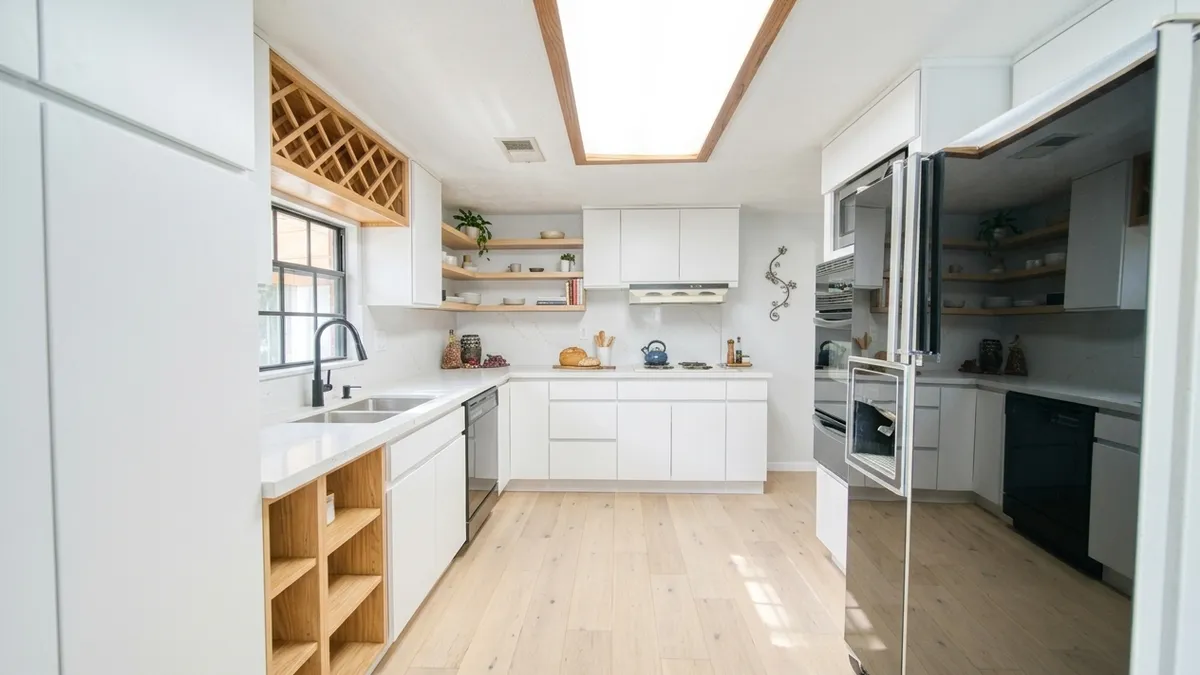
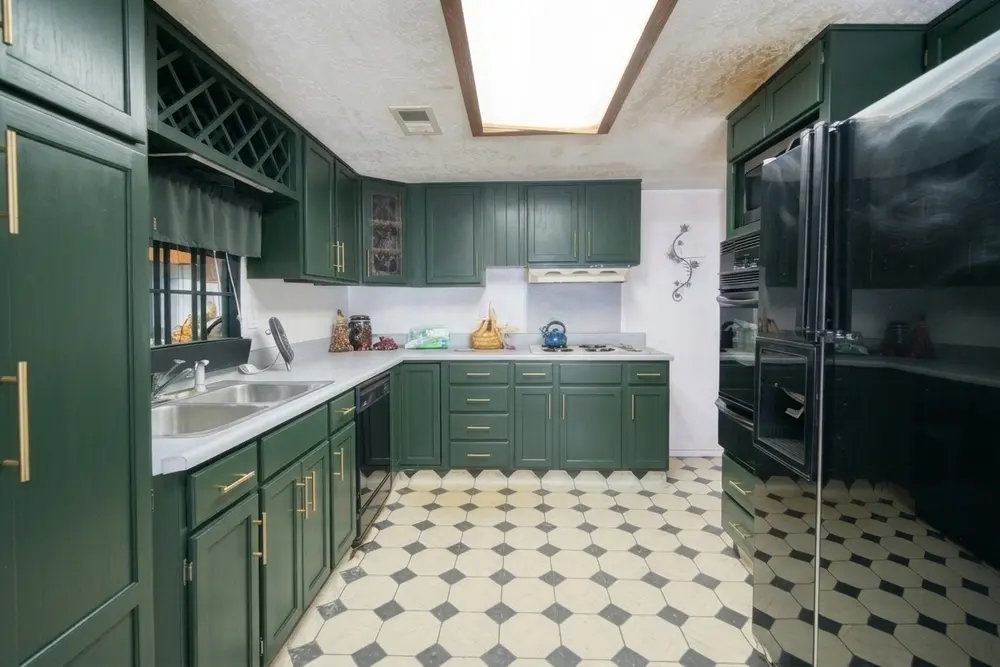
The slab version. Every door and drawer front is now one flat panel; the green, the brass pulls, the countertop and the floor are as before.
3 free designs. No account needed.
Shaker doors have a square frame around a flat, recessed center panel. Slab doors are one flat panel with no frame. Shaker adds lines and shadow and reads traditional to transitional. Slab is calmer and modern, so color and grain do the work. In Kitchen AI you can see both on a photo of your own kitchen.
The kitchen in this article is a good test, because it already had a strong look: forest green paint and long brass pulls. Only one thing changed between the pictures, the shape of the doors.
What is the difference between shaker, slab and raised panel?
It comes down to the edge and the center of the door. A slab door is a single flat piece with square edges. A shaker door is built as a frame, with a flat panel set back inside it, so the inner edge of the frame is a square step. A raised panel door also has a frame, but the center panel is beveled or profiled, so the inner edge slopes and catches the light differently.
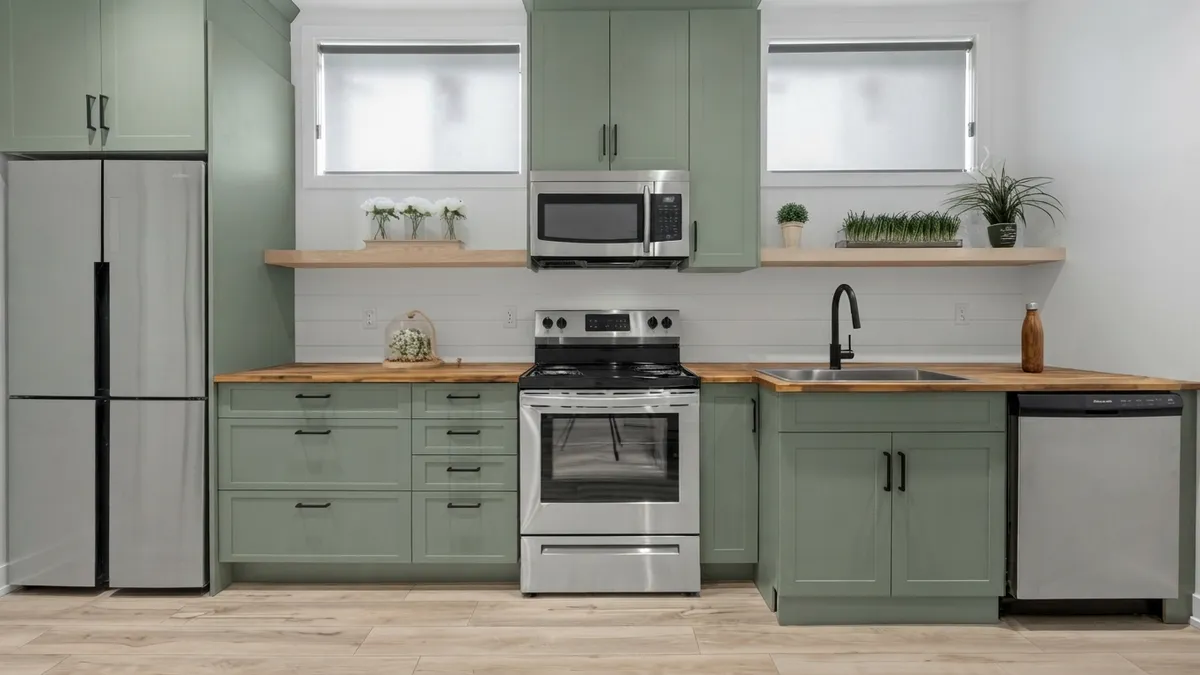
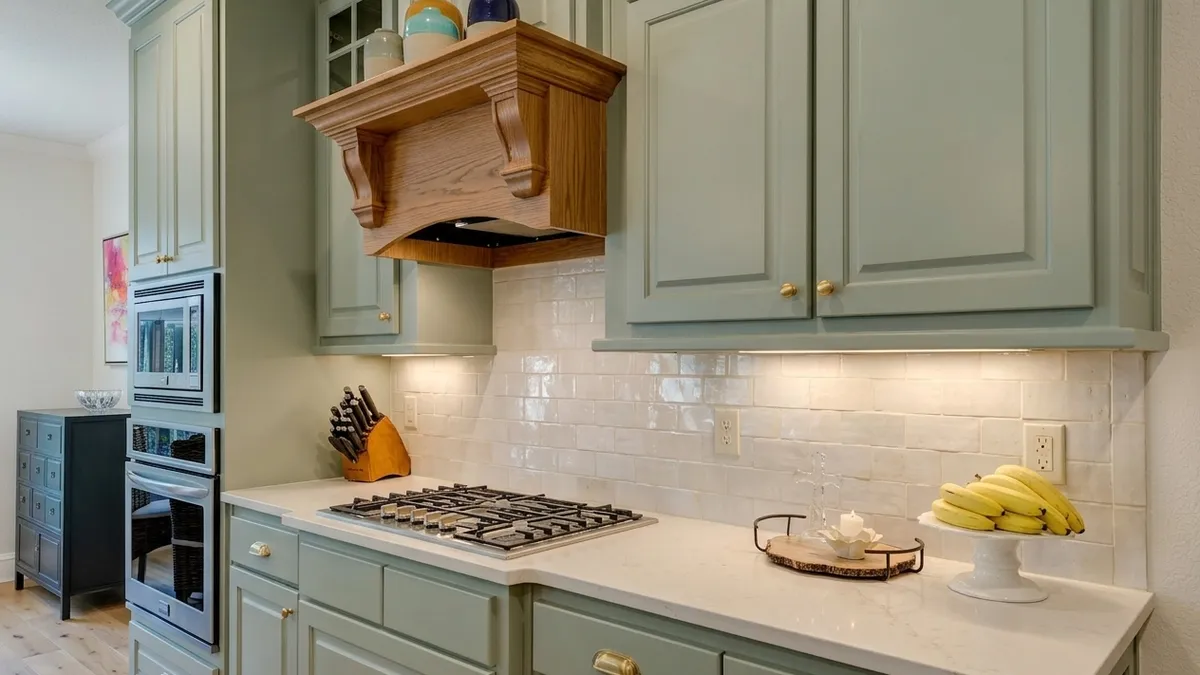
The photo below is one image with three crops of the same tall pantry doors, all with brass pulls. From left to right: the original raised panel, shaker, slab. The raised panel has a visible sloped bevel around the center. The shaker door has the same frame but a crisp square step. The slab is just a flat field of green.
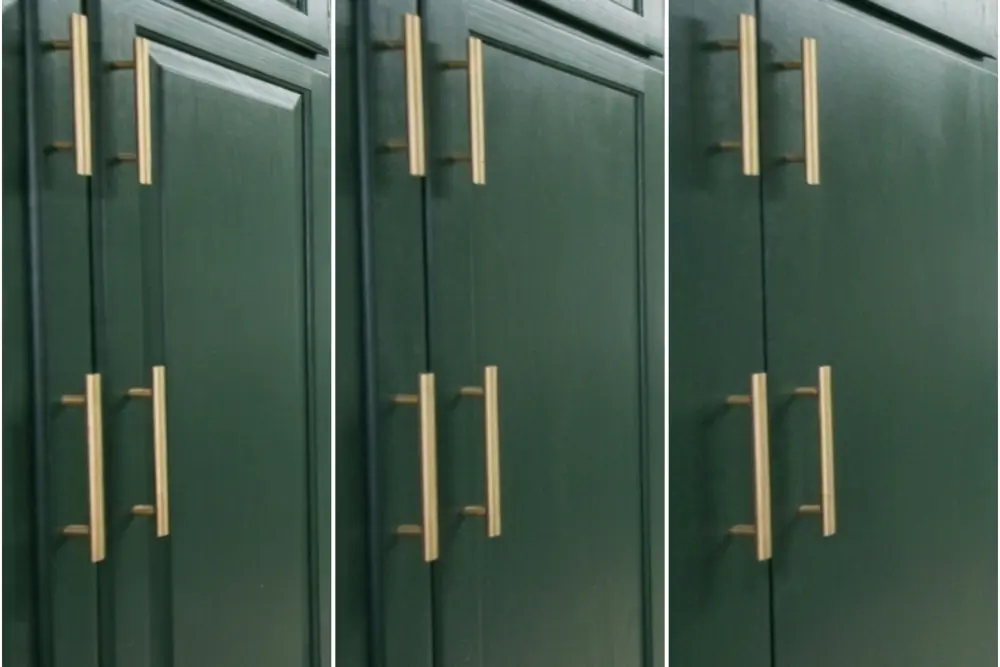
If you are comparing raised panel vs shaker, that bevel is the whole story. The shaker door is the simpler, squarer version of the same frame idea.
What did slab and shaker do to the same kitchen?
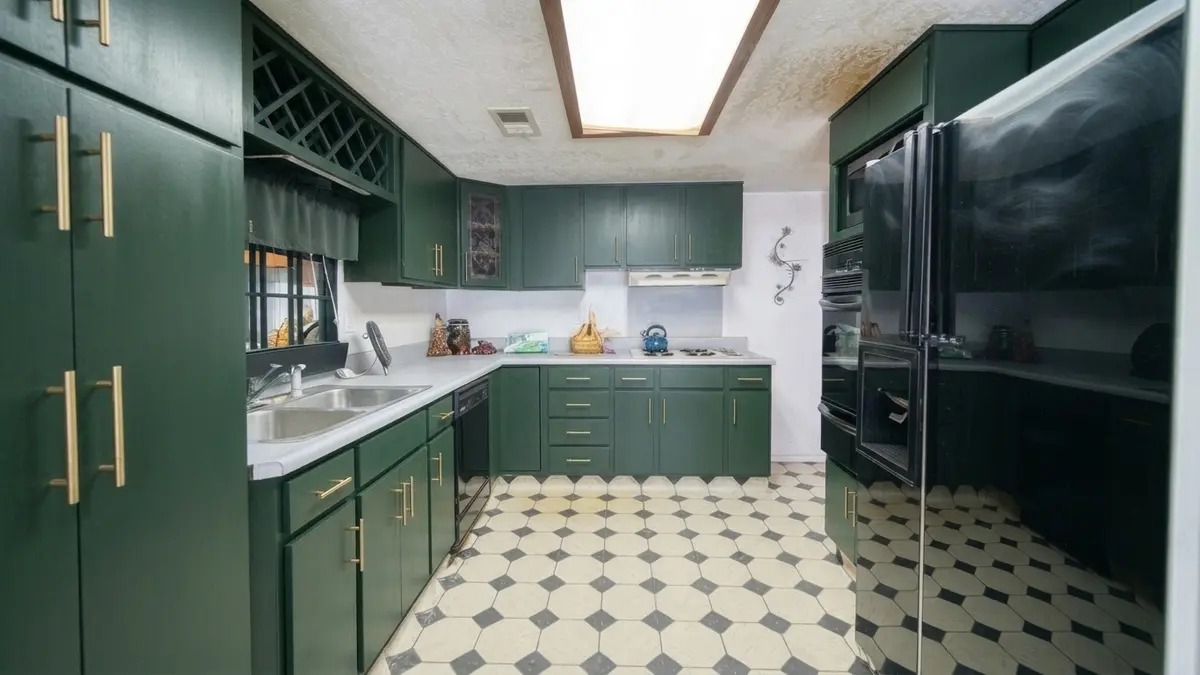
The starting photo is a dated U-shaped kitchen, shot with a wide-angle lens, that had already been redesigned once in Kitchen AI: green painted cabinets with raised-panel doors, brass bar pulls, a light gray countertop, a black French-door fridge and a cream-and-gray octagon tile floor. I ran only the Front style step on it, twice, once with Flat and once with Shaker, and kept one render of each. The step changes the shape of the doors. Color comes from the Cabinets step and hardware from the Handles step.
Slab. Every door and drawer front became a flat panel with square edges, which is the picture at the top. With the frames gone, the green reads as one block, and the long brass bars become the main line in the room: a row of thin vertical strokes on a calm surface. The green paint still shows a faint wood grain. The glass-front cabinet in the corner and the wine rack above the sink stayed as they were.
Shaker. The doors got a square frame with a flat center. Those frame lines add shadow, and the room keeps the traditional feel it started with. Two honest observations. First, the drawer fronts came out almost flat, including the stack of four drawers beside the cooktop, so this render is shaker doors over slab-like drawers. That is a common real-world combination anyway, but the app did not do what a full shaker set would. Second, at full-room distance this picture and the raised-panel start look very similar. You see the difference up close, in the bevel versus the square inner edge.
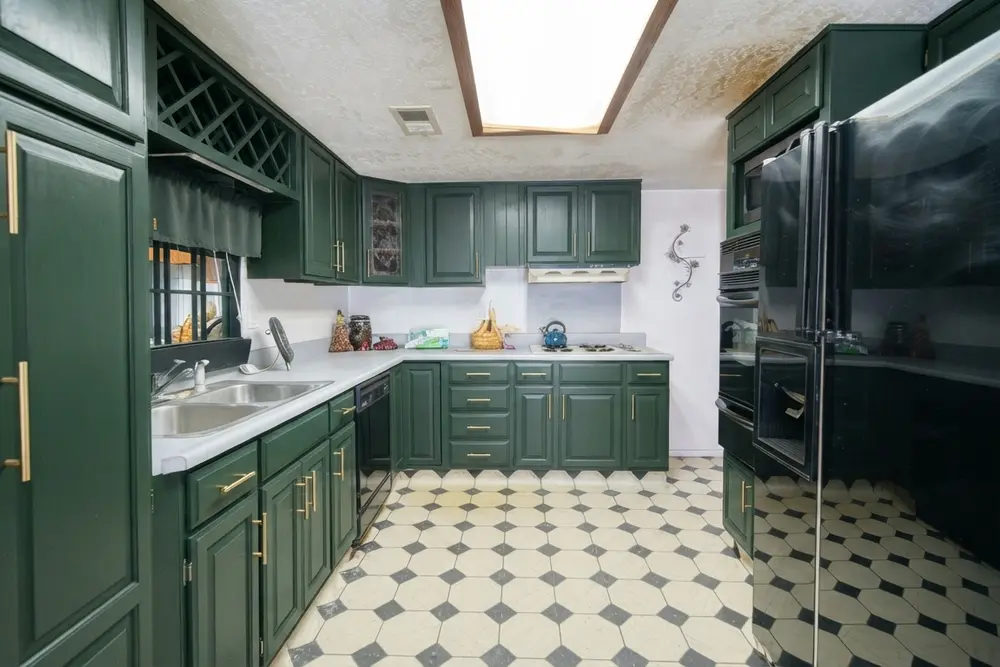
So for this room, the big change is slab, not shaker. If your current doors are raised panel and you want a clearly different look, a flat door will change the room far more than a shaker door will.
Cleaning, paint and cost: what actually differs?
Cleaning. A shaker door has an inside corner where the frame meets the center panel, and dust and cooking grease settle there. A slab door wipes clean in one pass. Near the cooktop, that adds up.
Paint and wood grain. Slab shows off a wood grain or a clean painted finish because nothing interrupts it. A painted shaker door is assembled from several pieces, so the joints are where paint can crack as the wood moves. In our render the green still shows a faint grain under slab, a reminder that color and grain are what you are choosing with a slab door.
Cost. I won't give you a number, because the gap depends on the material, the finish and whether the cabinets are stock or custom. A shaker door is built from five pieces, a frame and a panel, so it takes more joinery than a slab cut from one board. That does not make slab the cheap option by default: the material and the finish move the price more than the shape does, which is why the same door style can sit at very different prices from one maker to the next. Get quotes for both on your actual cabinet count.
Which one suits your kitchen?
- You want a calm, modern look. Slab, in a flat color or a visible wood grain. Our modern kitchen page shows how far that goes.
- Your house is traditional or transitional. Shaker keeps the frame lines the architecture already has.
- You go for a farmhouse feel. Shaker, usually with painted cabinets. See modern farmhouse.
- The cooktop wall gets splattered. Slab, or at least slab drawers, because there is no groove to clean.
- You love your long, bold hardware. Slab lets the pulls lead, as in the hero. Shaker shares the attention with the frame.
The Front style step also has Reeded, Classic framed and Glass uppers. For the full range of looks, start from the kitchen styles hub.
What a render can't tell you about doors
- It is an impression, not a drawing. The picture shows the look on your photo. It is not a measured plan.
- It may change doors more than drawers. In the shaker render the drawer fronts barely changed. Check the whole image.
- Real construction. Door thickness, frame width, hinge type and overlay are not shown.
- Price. The app does not quote one, and it does not tell you whether a door style is available for your cabinets.
Treat the render as a way to decide the direction, then order a sample door and hold it up in your own light.
Frequently asked questions
Can I change my cabinet doors from raised panel to shaker?
Yes, but not with paint. Paint changes color, not the shape of the door. A new door style means new doors on the existing boxes, or refacing, or replacing the cabinets. Our guide to refacing vs replacing walks through the choice, and if you own IKEA SEKTION boxes, custom doors for SEKTION covers the vendors.
Are shaker cabinets out of style?
Not by the best data I could find. In Houzz's 2022 U.S. Kitchen Trends Study, shaker was the most common cabinet style among renovating homeowners, ahead of flat panel and raised panel. That is a 2022 study, so it says little about today, and it measures what people build, not what looks fresh. Shaker is so common that it can look default. The color, hardware and the rest of the room are what make it look current.
Published November 2, 2026. The images in this article were made with Kitchen AI and are an AI impression, not a technical drawing. How we mark that.
I build Kitchen AI on my own: the app that shows your own kitchen in a different style. For these articles I test everything in real rooms, with real photos, and write down what happens. Something wrong, or missing? Let me know.